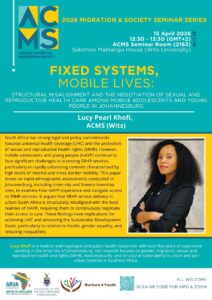
South Africa has strong legal and policy commitments toward Universal Health Coverage (UHC) and the protection of sexual and reproductive health and rights (SRHR). However, findings from a rapid ethnographic assessment in Johannesburg, across inner-city and Soweto, highlight a clear gap between policy and lived reality.
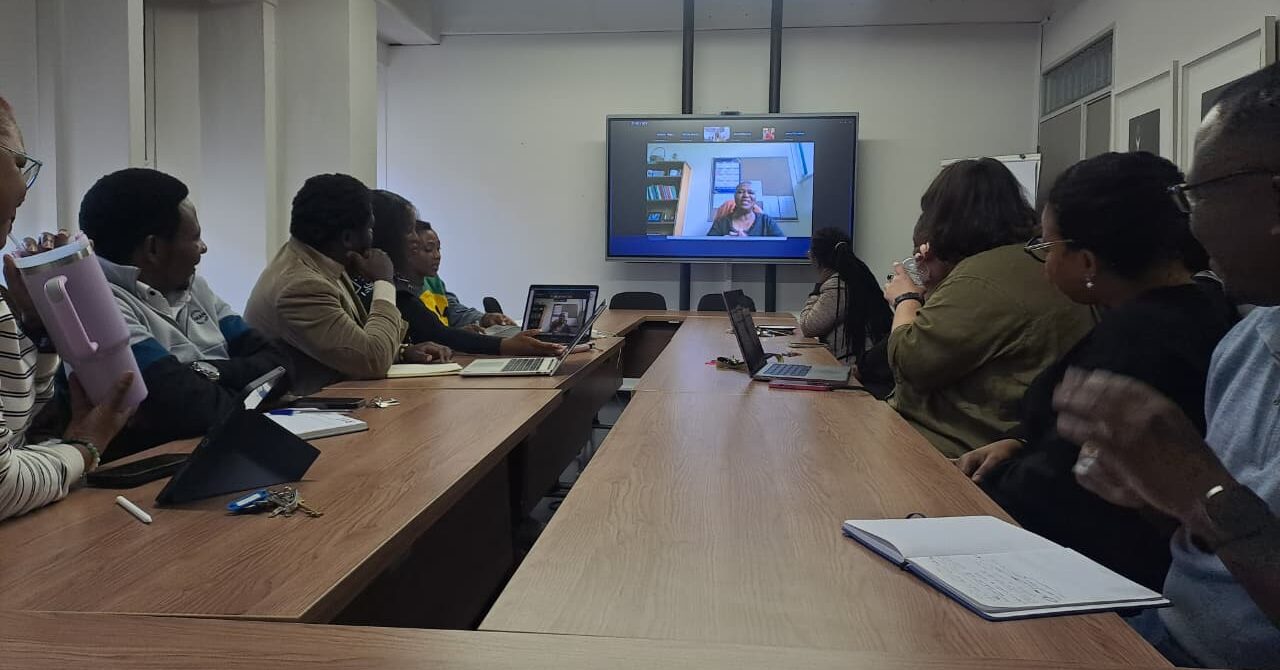
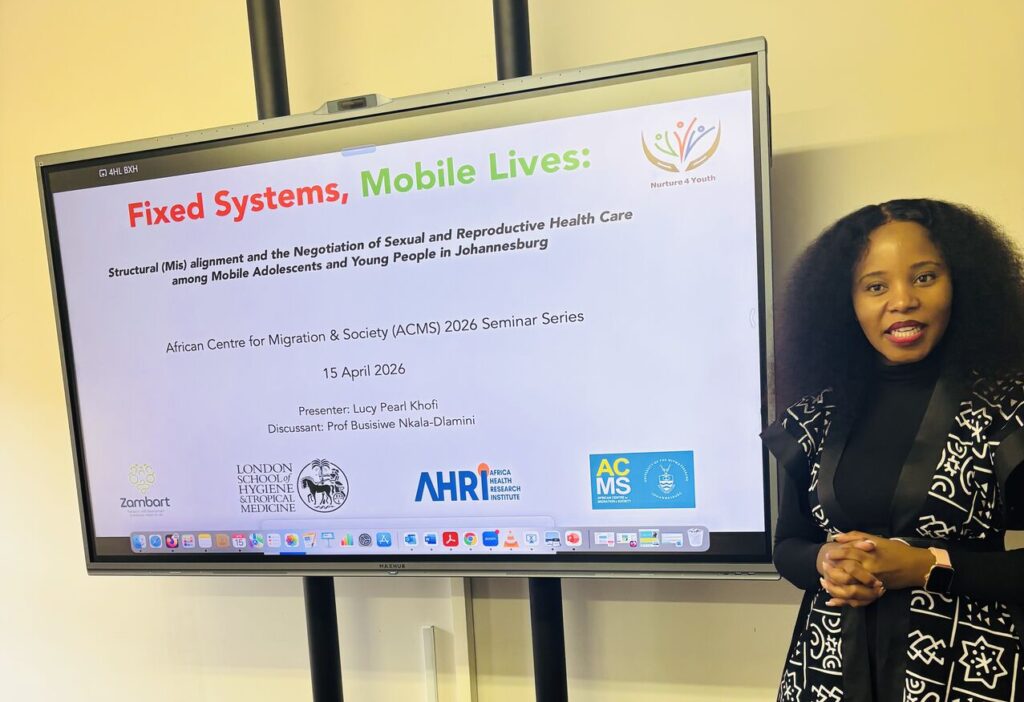
On 15 April, ACMS post-doctoral fellow Dr Lucy Pearl Khofi presented at the ACMS Migration & Society Seminar Series a paper on: ‘Fixed Systems, Mobile Lives: Structural Misalignment and the Negotiation of Sexual and Reproductive Health Care among Mobile Adolescents and Young People in Johannesburg.’ Professor Busisiwe Nkala-Dlamini of the Wits University, Department of Social Work, was the discussant.
 Mobile adolescents and young people (mAYP), particularly in rapidly urbanising settings shaped by internal and cross-border mobility, face significant barriers to accessing SRHR services. Long waiting times, overburdened facilities, and rigid administrative systems often make access difficult. Many are forced to choose between seeking healthcare and meeting immediate economic or family responsibilities.
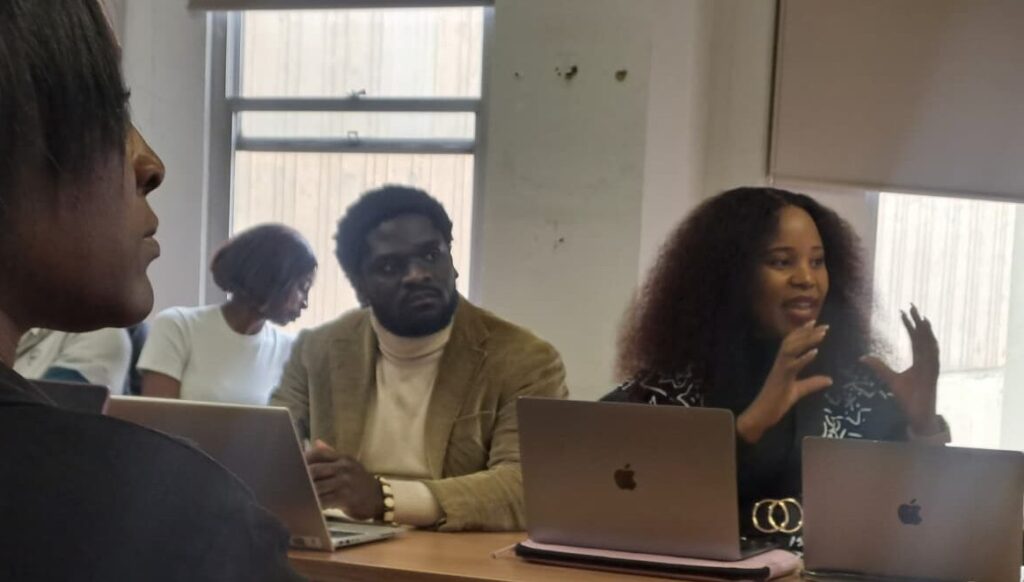 Dr Khofi argues that SRHR service delivery is structurally misaligned with the lived realities of mAYP. While health systems assume stability and continuity, young people’s lives are often mobile, uncertain, and economically constrained. As a result, access to care is not guaranteed, but has to be actively negotiated, and is frequently uneven.
The seminar challenged narratives that place responsibility on young people’s healthcare seeking behaviours solely on them; instead pointing to systemic and institutional barriers as central to the issue. Therefore, despite strong frameworks on paper, meaningful access remained inconsistent in practice.
These insights have important implications for achieving UHC and advancing the Sustainable Development Goals, particularly those related to health, gender equality, and reducing inequalities. Addressing these challenges requires rethinking how health systems are designed and implemented to better align with the realities of mobile populations.
If you missed this intriguing public seminar, catch the short video recap below:

0 Comments