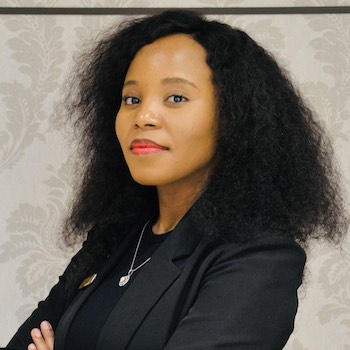
Lucy Khofi is a medical anthropologist and public health researcher with interdisciplinary expertise in gender, migration, sexual and reproductive health and rights (SRHR), food insecurity, and structural vulnerability in urban and peri-urban contexts in Southern Africa. She is a Postdoctoral Researcher at ACMS, University of the Witwatersrand, where she is part of the NIHR-funded Nurture4Youth project focusing on mobility, youth wellbeing, and access to SRHR services.
Lucy’s Joint PhD in Public Health and Medical Anthropology from the University of the Witwatersrand and the University of Amsterdam examined the gendered dimensions of the Water–Energy–Food (WEF) Nexus, with particular attention to hunger, care work, and sexual and reproductive health among women living in urban informal and peri-urban settings. Her work is grounded in long-term ethnographic research conducted in Johannesburg and the Eastern Cape, and is informed by a strong mixed-methods background that integrates qualitative ethnography with quantitative and participatory approaches.
Her research has been published in leading international journals. Her scholarship foregrounds lived experiences of marginalisation, examining how structural violence, migration status, and gendered inequalities shape access to food, health care, and reproductive autonomy. She has an established track record of translating research into policy-relevant outputs, including policy briefs, applied research reports, and stakeholder-engaged knowledge production.
Lucy is also an award-winning activist and has extensive experience consulting with government departments, research institutions, and non-governmental organisations on issues related to SRHR, gender equality, food security, and health systems. Her consulting work includes policy analysis, programme evaluation, and research design, with a focus on strengthening evidence-informed policy and practice.
In addition to her academic and consulting work, Lucy is actively involved in feminist and community-based initiatives. She is the founder of Women’s Health Ekklēsia. She brings extensive experience in qualitative and mixed-methods training, rapid ethnographic assessments, participatory research, and mentorship of early-career researchers.