The African Centre for Migration & Society (ACMS) is the continent’s leading scholarly institution for research and teaching on human migration and displacement, dedicated to shaping global discourse on mobility and social transformation.
Based at the University of the Witwatersrand in Johannesburg (South Africa), ACMS is an independent and interdisciplinary research centre with three key areas of work: research, postgraduate teaching, and outreach. We aim to influence global and regional academic research agendas, policy deliberations and civil society mobilisation.
News
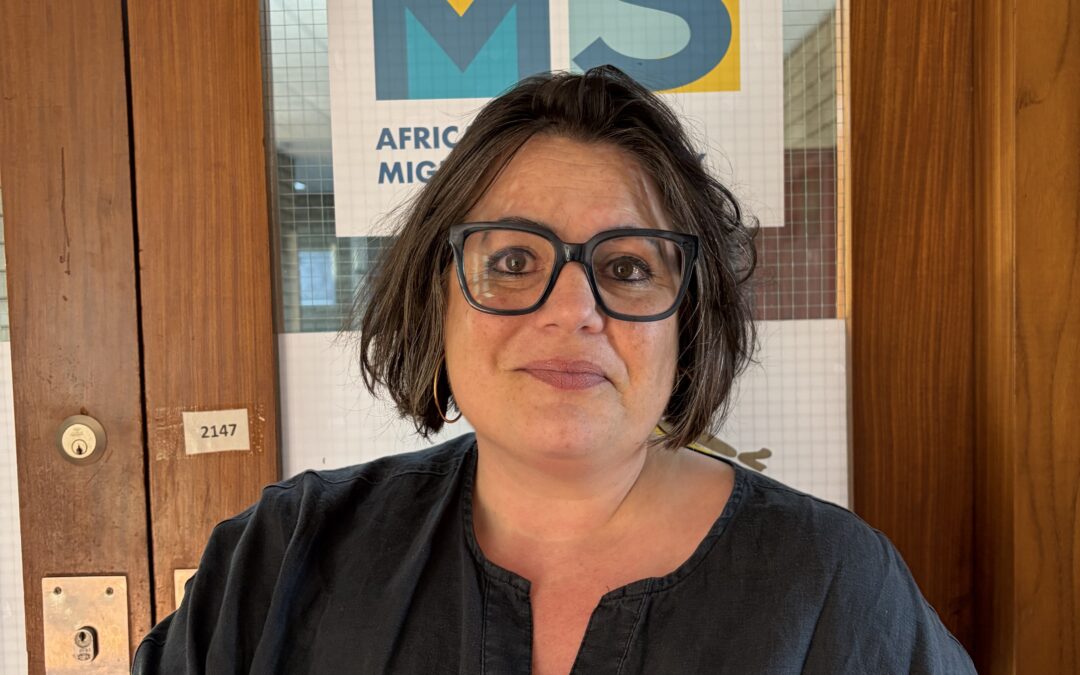
The countdown is over! The 2026 Spring School starts today.
It is the kick-off of the 2026 Spring School & Policy Dialogue: Researching Migration & Health. As we begin this vital hybrid...
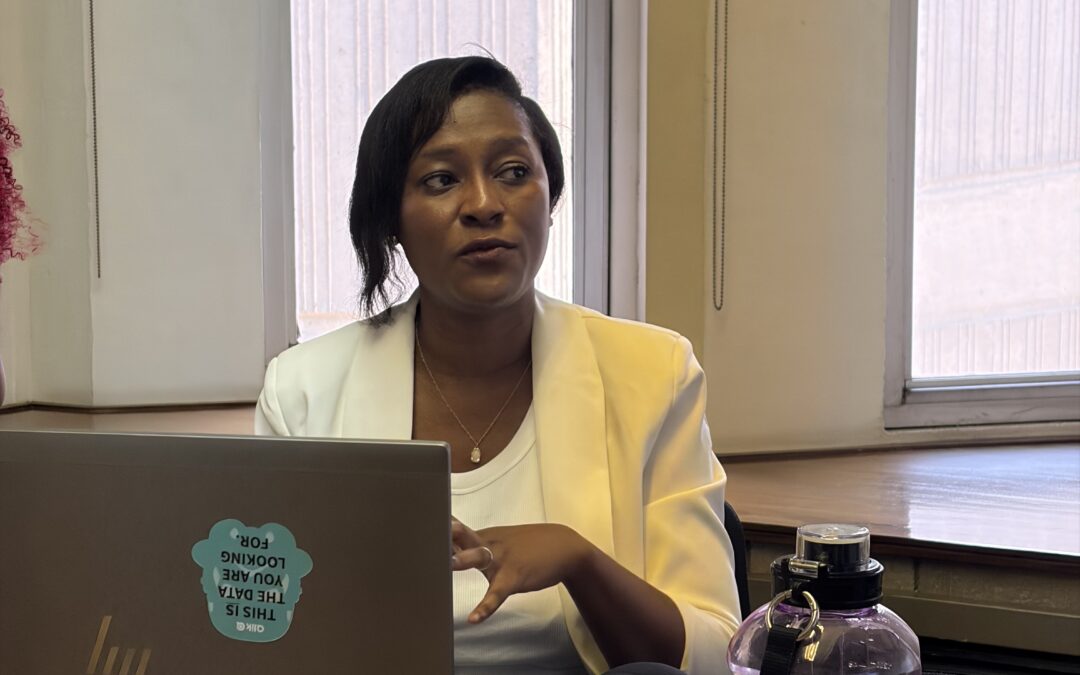
Recap: Musina in Motion – Mapping Mobility, Settlement and Everyday Life in a South African Border Town
In a fascinating exploration of migration data and lived experience, Dr. Kabiri Bule, Dr. Sostina S. Matina, and Isabella Mockridge...
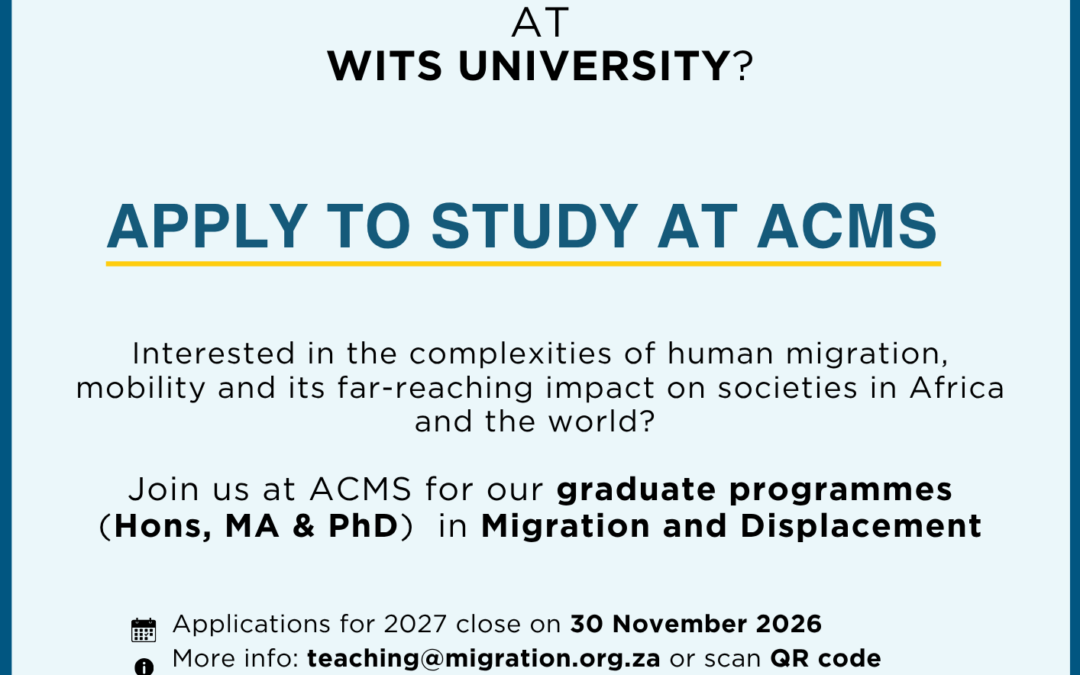
EXTENDED: Postgraduate Applications Closing 30 November 2026
Looking for a graduate programme at Wits University? Interested in the complexities of human migration, mobility, and its far-reaching...
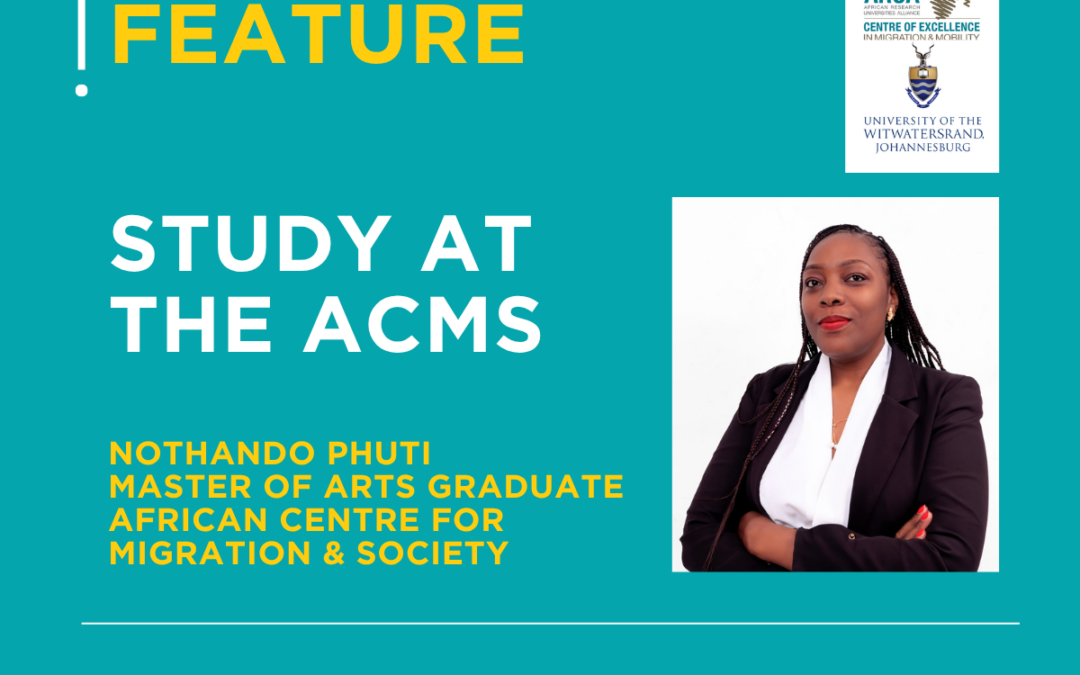
Student Feature: Nothando Phuti – Study at the ACMS
"The interdisciplinary academic environment at ACMS provides vital grounding for anyone in the human sciences looking for a deeper...
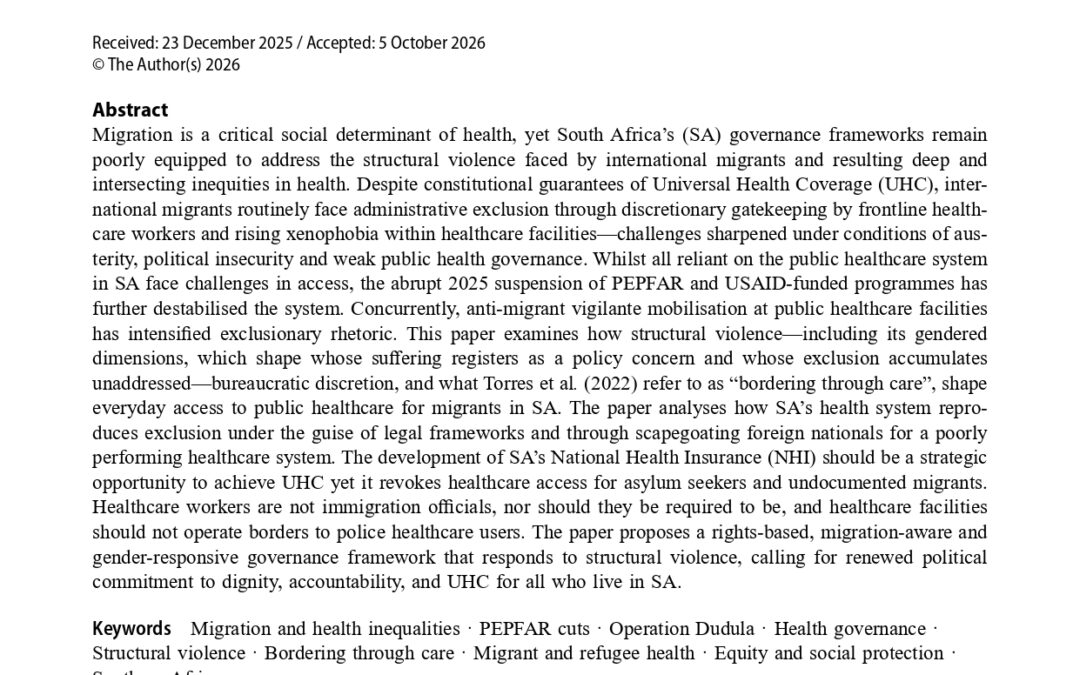
NEW PUBLICATION: Examining the ways in which structural violence, austerity, and health governance shape migrant exclusion in public healthcare in South Africa
Migration is a critical social determinant of health, yet South Africa's governance frameworks remain poorly equipped to address the...
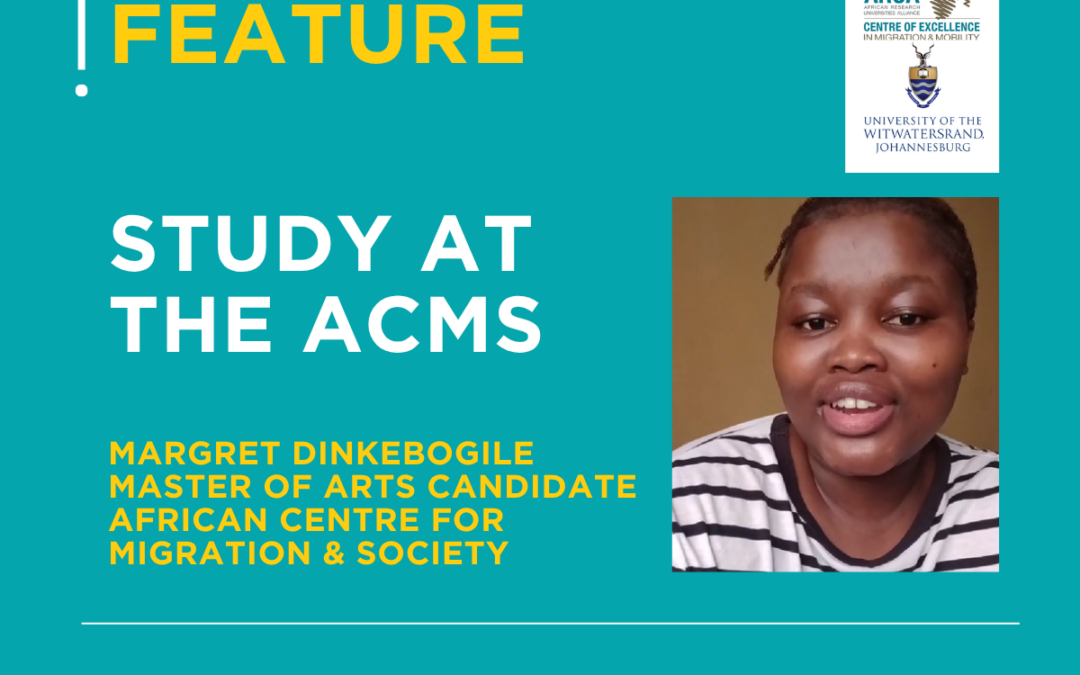
Student Testimonial: Margret Dinkebogile – Study at the ACMS
Meet Margret Dinkebogile, a Master of Arts candidate at the African Centre for Migration & Society. Margret is part of a new...
188 students
have completed courses
with ACMS since 2004
PhD - 23
Masters - 132
Honors - 33
Study
Research

Moral B/orders & the Politics of Belonging

Socio-Spatial Transformations

Mobilities, Health & Wellbeing
Research-Linked Projects
Different areas of our research are linked to specific projects, some of which have
grown into established entities of their own.

Xenowatch

ARUA

SARChI

CoRE

Mobility Governance Lab

African LGBTQI+ Migration Research Network: ALMN

Global Health Research Group: GEMMS

Atlas of Uncertainty

Global Health Research Group: Nurture4Youth

Xenowatch
African Research Universities Alliance - ARUA
Mobility Governance Lab
The Mobility Governance Lab (MGL) explores the governance of mobility at multiple scales across the global south. It is an autonomous, critical space working to realise principles of innovation, independence, and equitable partnership. Through collaborative research, it offers original insight and perspectives to scholars, civil society, and practitioners while fostering the next generation of engaged researchers from Africa and beyond.
Initially concentrating on multiple mobilities within and from Africa, the MGL works through a series of inter-connected research and pedagogical themes relevant to the movements across ‘the global south’. It positions human mobility as a heuristic providing insights into practical workings and transformations of regulatory and governance systems. Speaking to contemporary policy, advocacy, and academic concerns, it supports the next generation of scholars and scholarship considering the socio-politics of human mobility. By attracting research support, through creative engagements at multiple locations and scales, and by facilitating dialogue across global and professional hierarchies, it amplifies these findings and insights in the support of civil society, scholarly, and public policy formation.

Strengthening Strategic Engagement and Movement Building for Migrant Rights in South & Southern Africa
Research project that aims to investigate the viability of movement building for migrant rights in the South African context, characterised by growing xenophobic populism and discrimination, as well as push-back by an active, albeit fragmented civil society ecosystem.
The project seeks to define strategic and proactive advocacy for migrant rights, identify engagement strategies with various partners, and support the migrant sector in crafting new narratives and long-term strategies to shift policy perspectives, for a more effective protection of migrants rights in the country
Cluster of Research Excellence in Migration and Health
The Cluster of Research Excellence (CoRE) in Migration & Health addresses the key scientific challenge of identifying and developing solutions, relevant to the social, cultural and political contexts, and the root causes of poor health among migrants to enhance the positive health outcomes of migration across one of the largest migration corridors globally, the African Union (AU) – European Union (EU) corridor. The corridor includes countries in Africa, Europe and the Eastern Mediterranean and is associated with multiple risk factors for health, determined by varying structural and social contexts. These factors are experienced differently by diverse migrant groups and the communities through which they move, live and work; and change across time and places of origin, transit, destination; and, for some, return.
The CoRE in Migration & Health is co-led by Jo Vearey (African Centre for Migration & Society (ACMS) & the ARUA Centre of Excellence in Migration & Mobility, WITS University) and Soorej Jose Puthoopparambil (Department of Women’s and Children’s Health, International Child Health and Nutrition and the WHO Collaborating Centre on Migration and Health Data and Evidence, Uppsala University). The CoRE initiative involves multiple partners and is supported by the African Research Universities Alliance (ARUA) and The Guild of Research-Intensive European Universities.
African LGBTQI+ Migration Research Network: ALMN
A description of this project and a link to visit this project’s page.
GEMMS
Gendered violence & poor mental health among migrants in precarious situations (GEMMS) is an NIHR-funded Global Health Research Group involving collaboration between ACMS, the University of Essex, the Tata Institute for Health Sciences (TISS) in India, Africa University in Zimbabwe and Health Poverty Action (HPA). The link between Gendered Violence (GV) and poor Mental and psychosocial Health (MH) is widely acknowledged, yet poorly understood. Interventions that address these global health challenges generally focus on either GV or MH and ignore the damaging cycle whereby GV reinforces MH and vice versa. Existing interventions are limited in their reach and only address the needs of fixed populations. As a result, there is little uptake among migrant groups, especially those living in those moving in search of improved livelihood opportunities. These situations are associated with chronic precarity, including in work, and living conditions, barriers to healthcare, and-for those who cross national borders-legal status. This precarity can create additional burden and result in different risks and resilience to GV and poor MH over time and in different places but the mechanisms that shape these risks under-explored. Therefore, appropriate interventions that tackle the intersecting risks to GV and poor MH experienced by migrants in precarious situations requires better understanding of the factors determining these risks and how they change over time and place.
The GEMMS research group brings together academics with a range of relevant GV and MH expertise and practitioners who provide on-going support to migrants to establish a programme of work that generates new knowledge and improved understandings, and co-design evidence informed training intervention and public health solutions. We build on long-standing connections amongst the research group members who have a demonstrated interest in and commitment to community involvement in research. Building on research and interventions in South Africa and India, we apply theoretical and empirical insights to support efforts to improve the lived realities of migrants in precarious situations within the Global South through participation of affected populations in research.
The Atlas of Uncertainty
The Atlas of Uncertainty is a publication, an exhibit, and a digital platform. It integrates written essays, visual art, statistics, sound, and critical cartography. Created dialogically, it offers layered and nuanced understandings of transforming urban spaces and the moral and material economies that bind them. It is at once a tool of knowledge communication and a reflection on what we believe and how we know it.
The Atlas aims to move from the ‘census’ to the ‘senses’ evoking sensorial and embodied experiences of the material, in ways that challenge traditional ways of representing African cities.
Nurturing the resilience of mobile youth to navigate health and wellbeing crises in southern Africa (Nurture4Youth) is an NIHR-funded Global Health Research Group involving collaboration between ACMS, the London School of Hygiene & Tropical Medicine (LSHTM), the Africa Health Research Initiative (AHRI) and Zambart. Our goal is to build and strengthen a dynamic research partnership focused on producing policy-relevant insights that support mobile adolescents and young people.
We also aim to strengthen capacities in the applicant South African, Zambian and UK institutions and the young people we work with, to co-develop and lead an ambitious programme of youth-led work which builds resilient mAYP social networks that enhance visibility and solidarity, as well as informs policy and practice on building responsive SRHR services for mAYP. Through this work, we aim to enhance their resilience and improve their access to sexual and reproductive health services, ultimately contributing to better health and wellbeing.
