Today—18 December—we recognise International Migrants Day. In 2000 the United Nations (UN) General Assembly established this day in commemoration of the International Convention on the Protection of the Rights of All Migrant Workers and Members of Their Families, which had been adopted in 1990. Annually, the day serves to raise awareness about migrants’ rights and contributions. It emphasises the importance of safer migration systems, along with recognising the role of human mobility in development and cultural exchange.
However, International Migrants Day is not only about remembering migrants’ contributions, but also drawing attention to the challenges they face across their migration cycles—before departure, during transit, at destination, and on return.
Migrants—especially undocumented migrants, asylum seekers, and refugees—often face legal, financial, and administrative barriers to healthcare. These can include a lack of documentation, exclusion from national healthcare systems or schemes, language barriers, and fear of arrest or deportation when seeking medical care. As a result, preventable and treatable conditions frequently go unmanaged.
This month, we shine the ACMS spotlight on one of our thematic areas, which focuses on better understanding and addressing the health challenges migrants encounter: the Mobilities, Health and Wellbeing theme.
Mobilities, Health & Wellbeing:
Why is this one of ACMS’s main thematic focus areas?
Globally, migration and health research has gained traction not only because of heightened recognition of how migration determines health and wellbeing, but also as a result of increasingly securitised immigration regimes that frame migrants as a security threat and the associated erosion of refugee protection mechanisms. Complicated by xenophobia, racism and nationalism, the ambition of upholding the right to good health for all, regardless of place of birth, is increasingly out of reach.
Recognising this, ACMS views health as fundamentally political, therefore expanding the scope beyond healthcare systems to explore the bi-directional relationship between migration and health. Through multi-level and multi-sited research, we investigate how social and structural determinants of health are shaped by both the process and the politicisation of migration. This includes mapping the (dis)connections between global and regional governance ecosystems, national legislative and policy responses, and the lived experiences of diverse migrant groups across Southern Africa and beyond.
At the core of our work is a justice-driven research agenda that foregrounds the ethical and methodological challenges of researching migration and health. We collaborate with a wide range of international and local stakeholders, including civil society networks, and encourage postgraduate students to align their research projects within this thematic area of work. In addition to dissemination of our research, our outreach work includes participation in various governance and policy forums, engagements with civil society organisations and contributions to public discussions and debates relating to migration and health. Team members frequently act as technical advisors to international organisations, including the World Health Organization (WHO) and the International Organization for Migration (IOM).
Who are the team members working under this research theme?
 The team is coordinated by Associate Professor Jo Vearey, who is also the ACMS Director. Vearey’s internationally recognised and globally impactful research in the field of migration and health is informed by her commitment to social and epistemic justice. Fundamental to her research practice is participation in policy processes at international and local levels, including exploration of approaches to address epistemic injustice in the development of appropriate policy responses.
 ACMS Research Associate, Dr Rebecca Walker, is a social anthropologist and research consultant specialising in migration, health, and human rights in Southern Africa. Walker’s work spans academic research, policy analysis, social justice and advocacy; with a strong focus on healthcare access, displacement, and gender.
 Dr Langelihle Mlotshwa is a senior public health researcher with experience in leading and contributing to multidisciplinary research projects across Southern Africa and beyond. Her current work focuses on sexual and reproductive health and rights (SRHR), young people’s health and well-being, and the intersections of migration, mobility, and urbanisation.
 Dr Sostina Matina is a public health researcher at the Centre, whose scholarship examines the intersections of migration, gender, ageing and health equity in Southern Africa. Her research draws on social epidemiology, health systems, and community-based enquiry to investigate how structural and policy environments shape healthcare access for marginalised and mobile populations.
 Dr Fehmida Qaddus Rabbani is a postdoctoral fellow at ACMS, whose research explores the intersections of migration, health, and mobility, with a focus on South Asian communities in African urban contexts. Her transdisciplinary work bridges migration, health, and urban sustainability, advancing inclusive policy and equitable urban futures.
 Dr Lydia Moyo is a postdoctoral research fellow under the Disrupting the cycle of gendered violence & poor mental health among migrants in precarious situations (GEMMS) research group. Her research interests are in migration, xenophobia, language, and integration.
 Postdoctoral fellow, Dr Neusa Torres, is a public health scholar. Her work bridges the social sciences and public health to examine the complex social and behavioural dimensions of health systems. Torres’s research focuses on understanding how social structures, cultural norms, and individual experiences shape health-seeking behaviour and access to care.
The team is also comprised of PhD students whose doctoral research projects fall under this theme: Blessing Mukuruva, Melisa Dlamini, Tanatswa Chineka, Melvin Simuyaba, Nompumelelo Nderere, Bothwell Vumai, and Learnmore Mvundura.
What are some of the main research projects?
Current projects include two National Institutes of Health and Care Research (NIHR)—funded Global Health Research Groups exploring mental health and violence among migrants in precarious contexts, and the wellbeing of migrant youth, across South Africa, Zimbabwe, Zambia, India and Cambodia. We also host the African Research Universities Alliance (ARUA)—The Guild of European Universities Cluster of Research Excellence (CoRE) in Migration and Health, which collaborates with academic and non-academic partners to investigate links between migration and health along the African Union—European Union migration corridor. Our MoVE:method:visual:explore project fosters critical engagement with arts-based research methods to explore migration and health. In addition, the collaborative Governing Migration and Health in Africa (GMH-Afro) initiative unites partners across the continent to document and analyse governance frameworks, legislation and policy responses to migration and health. Through building an open-access repository, we are supporting policymakers, programme designers, and civil society actors in advancing migration and health governance across Africa.
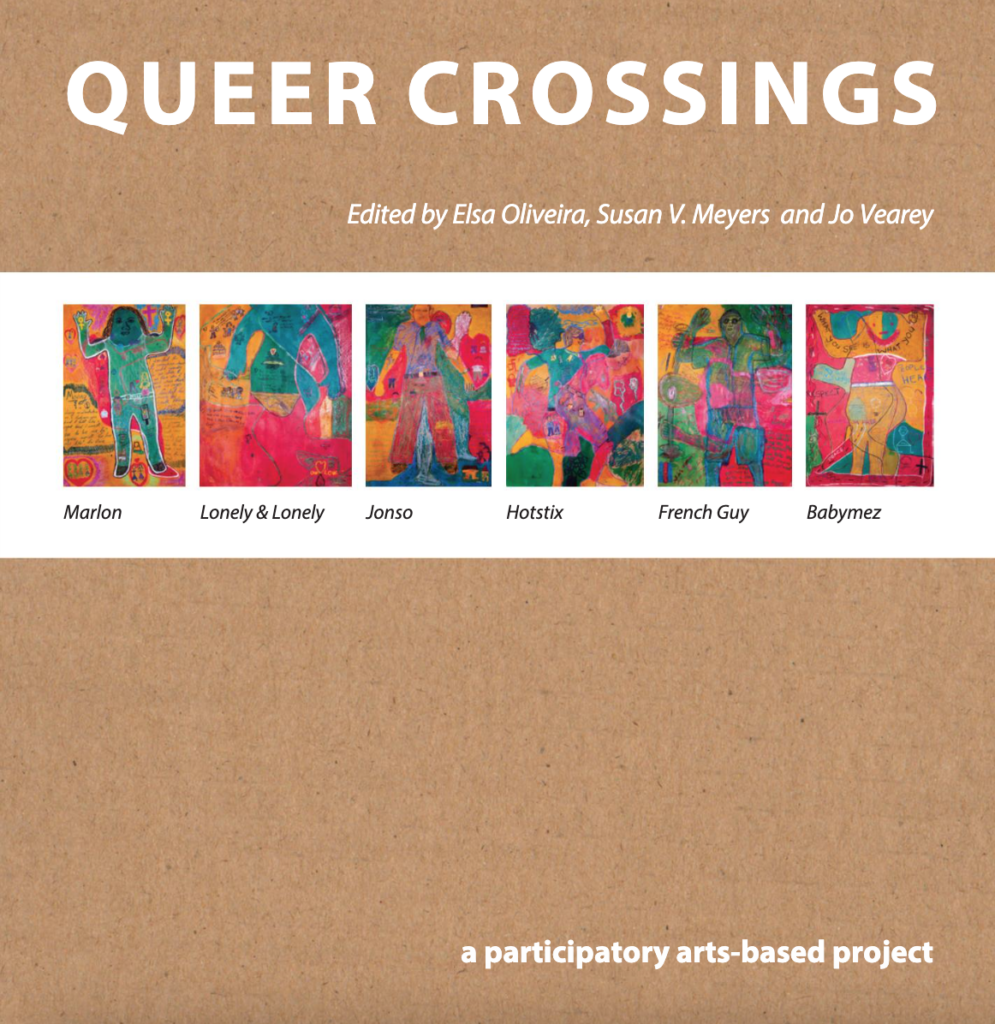 Click on the cover above to access the electronic version of this project book by MoVE.
What are some of the research team’s recent publications, events or accomplishments?
The latest publications to be produced by the Mobilities, Health & Wellbeing research team are:
Mlotshwa, L., Plüg, S., Simuyaba, M. et al. Sexual and reproductive health interventions for mobile adolescents and young people in sub-Saharan Africa: a scoping review. BMC Public Health 25, 3903 (2025). https://doi.org/10.1186/s12889-025-25119-4.
Walker, R., Vearey, J. “Closing the gap in the wrong direction” migration, health policy, and the exclusion of asylum seekers, refugees and undocumented migrants from healthcare access in South Africa. BMC Public Health 25, 3877 (2025). https://doi.org/10.1186/s12889-025-24751-4.
Associate Professor Vearey was recently part of a webinar organised by the South African Liaison Office (SALO), whereby she discussed migration and the right to healthcare in South Africa. In her presentation, she noted the “schizophrenia” of the development of a National Health Insurance (NHI) that aims to support the country’s goal of attaining Universal Health Coverage. According to Vearey, rather than addressing equity in access to quality healthcare, the NHI takes a regressive approach that revokes the right to basic healthcare services for asylum seekers and undocumented migrants.
To find out more about Mobilities, Health & Wellbeing at ACMS, click here to visit the theme page.

0 Comments