Speakers and participants joined us at Wits Business School and online yesterday for our hybrid Policy Dialogue: Migration, Urbanisation and People’s Health: Responding to Urban Crises through Evidence, Policy and Practice.
Dr Langelihle Mlotshwa opened the day by asking how we can use existing knowledge to strengthen coordination, recognition and accountability in our responses to migration and urban health.
In the opening panel, chaired by Ms Sasha Stevenson, Mr Diego Iturralde highlighted population mobility and its implications for planning. Dr Tshegofatso Carol Maimela examined how health services can better recognise mobility, while Dr Bulelani Kuwane drew on the South African Health Review to emphasise migration-aware systems, connected records and continuity of care.
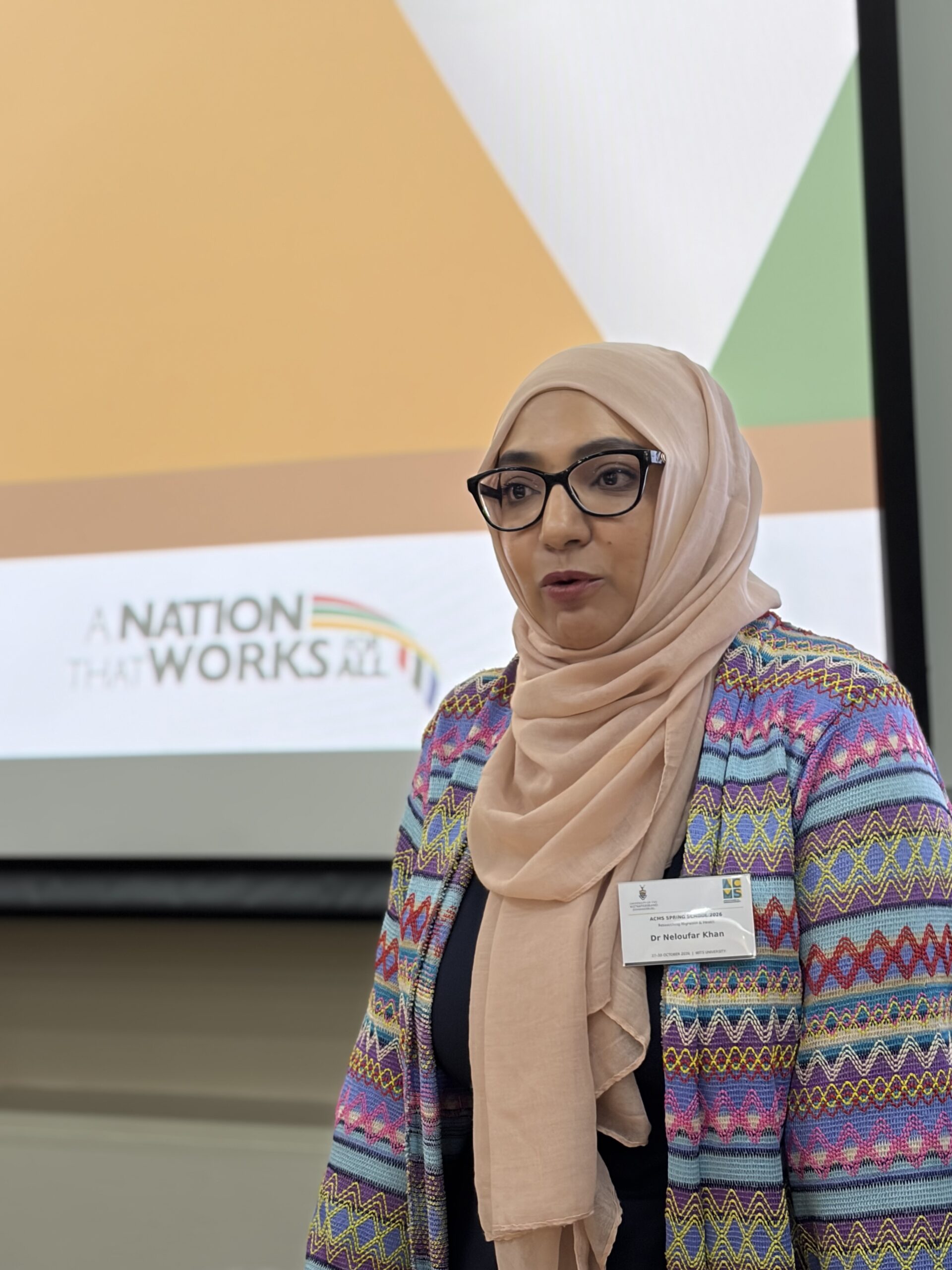
The session chaired by Dr Carren Ginsburg brought young people’s everyday lives into focus. Dr Neloufar Khan connected population dynamics with reproductive health and social development policy. Ms Zinhle Ngubo shared Nurture4Youth findings on mobility, sexual vulnerability and barriers to care, while Dr Aron Tesfai explored how everyday bordering, documentation and economic insecurity shape young refugees’ health and opportunities.
In the afternoon, Dr Sostina Matina chaired a discussion connecting gendered violence and mental health. Dr Jess Rucell examined obstetric violence, reproductive justice and health-system accountability. Professor Ingrid Palmary explored mental health experiences and responses among mobile populations, while Ms Naledi Joyi highlighted community support, safe referral pathways and care for survivors of gender-based violence.
Professor Lorena Nunez Carrasco and Associate Professor Jo Vearey brought these discussions together through reflections on collective responsibility, the politics of implementation and collaboration beyond the health sector.
A key contribution of the day was connecting health-service planning with the conditions of everyday urban life. Housing, employment, documentation, safety and social support shape whether people can access care and exercise their rights. Migration-aware responses therefore require coordinated action across institutions, alongside meaningful engagement with the communities concerned.
Thank you to our speakers, chairs and participants, in person and online, for a rich dialogue. We take these insights into the final day of the Spring School as we consider what we can realistically take forward together.
0 Comments