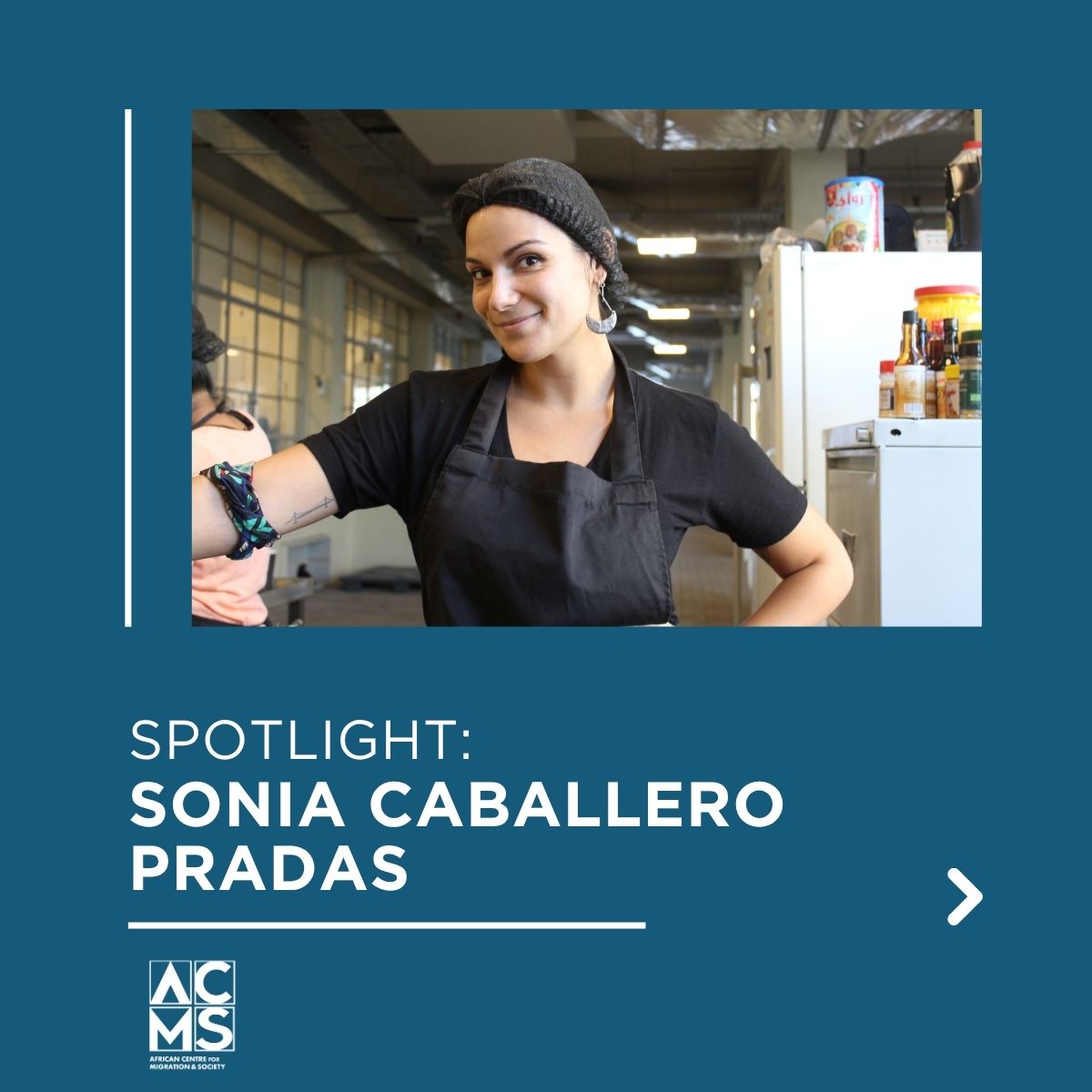
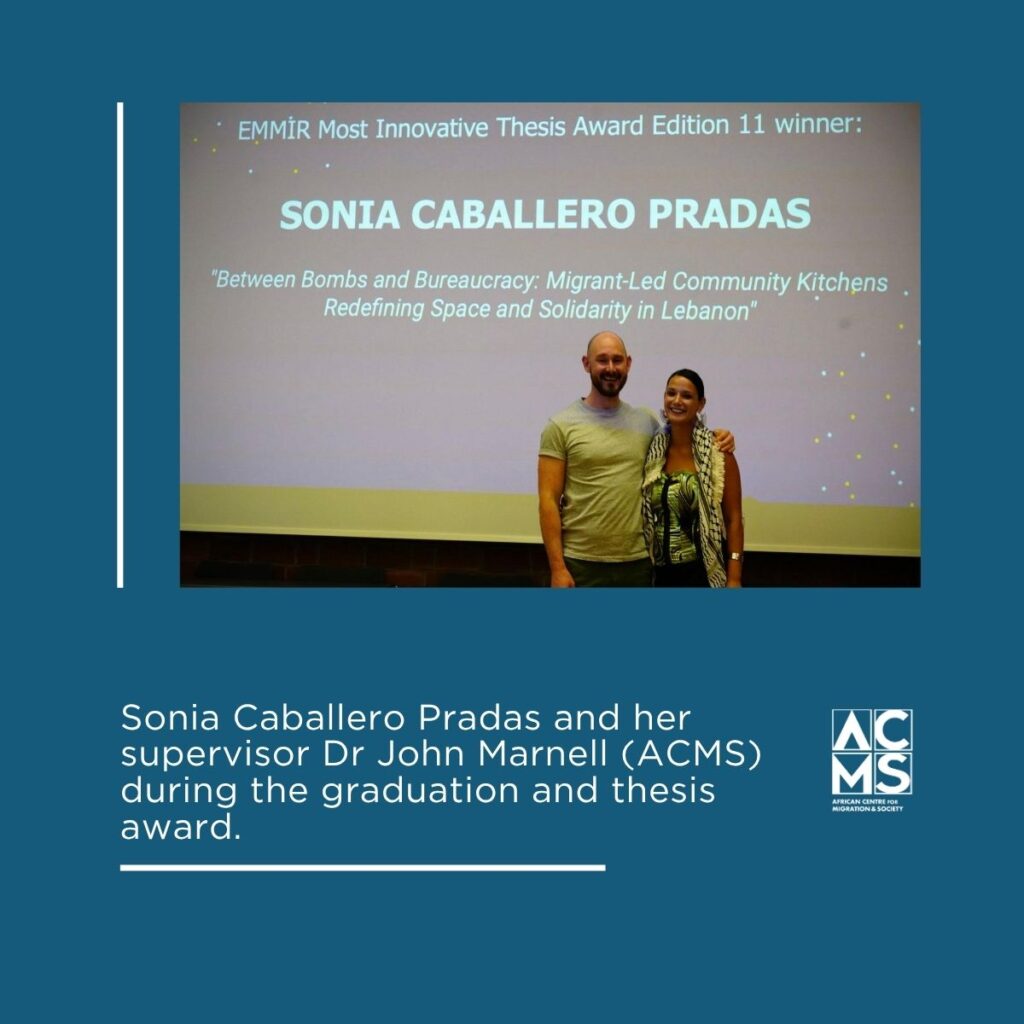
Every month, we highlight people connected to ACMS. This month, we are celebrating Sonia Caballero Pradas, who recently completed her European Master in Migration and Intercultural Relations (EMMIR). Her thesis, “Between Bombs and Bureaucracy: Migrant-Led Community Kitchens Redefining Space and Solidarity in Lebanon”, was completed through ACMS, under the supervision of Dr John Marnell. Sonia received the prize for the 2025 EMMIR Most Innovative Thesis Award Edition 11.
What led you to undertake a Master’s in Migration and Intercultural Relations?
One of the turning points that sparked my desire to learn more about migration came as I looked out from the balcony of my first home in Beirut. Across the street, almost every balcony was occupied by Black women wearing old-fashioned maid uniforms, as they were sweeping floors or hanging laundry. That ordinary image exposed the normalisation of the racialised labour that permeates daily life. What ultimately led me to pursue studies in Migration and Intercultural Relations was the persistence of racist bureaucratic systems that continue to overlook stories like those I later had the chance to document in my thesis.
What interests you about migration?
I think it is exactly the capstone that led me to pursue these studies: the ordinary, the daily life that slips through the cracks between displacement and discrimination. I am particularly interested in the ways the urban fabric is (re)created through intertwined experience from people on the move: a migrant-led collective, a religious spot serving as a space to connect, a night club playing familiar beats, a gathering around food whose ingredients have been transported (or smuggled) in a suitcase… I believe the ordinary, from heavily securitised, racialised and sexualised bodies’ experiences, are transgressions that help us see through static legal frameworks and reinvent ourselves.
What did your thesis look at?
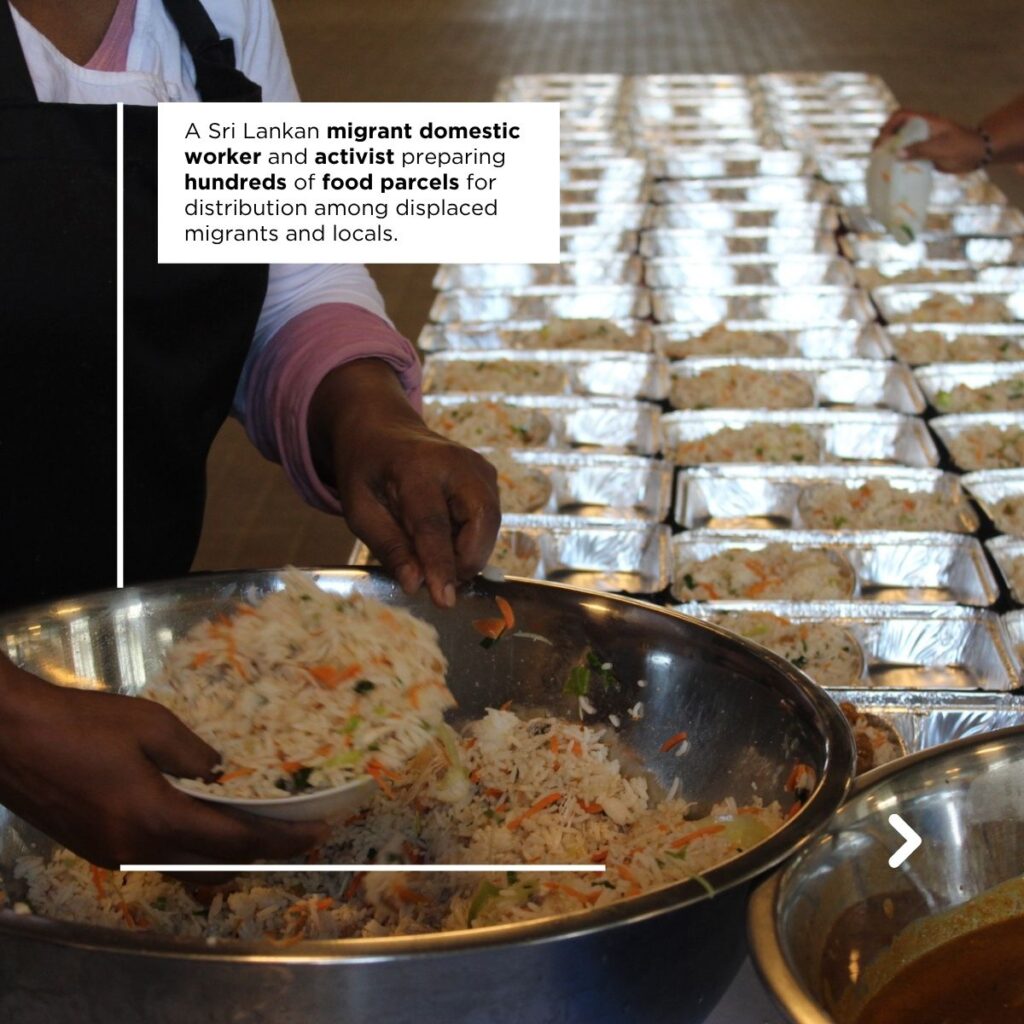
My thesis was carried out in extremely unsafe circumstances, as Israel launched its full aggression over Lebanon, displacing over 1.2 million people across the country. I landed in Beirut as bombardments were taking place a few kilometres away, just as some of the participants of my research did decades ago. I joined migrant-led community kitchens, makeshift installations where migrant domestic workers from African and Asian countries under the Kafala system, as well as Palestinian, Sudanese and Syrian refugee women, cooked hundreds of meals to support individuals surviving under attack and state neglect. I analysed the socio-spatial implications of these kitchens through the sensorial practices of collectively cooking and eating, their cultural heritage infused through recipes of solidarity.
What was your most interesting reflection during this thesis?
I must say that many of these reflections were ignited in conversations with my supervisor, Dr John Marnell, from the ACMS team. He pushed my thinking process and my stubborn idea of framing survival as ‘resistance’, a word with its own meaning in Lebanon. The women I worked with are an inspiration to me, yet I had to consider that their daily activism was not necessarily motivated by a desire to challenge patterns, but to survive the structured racism and sexism they endure, during the armed conflict but also before, as many experienced sexual violence, malnourishment, spatial control and neglect by their employers, neighbours, taxi drivers, even international institutions. Their fight for social justice often unfolded through the everyday negotiation of these violent structures, far beyond the clichéd notions of ‘agency’ that young scholars like myself are prone to use, since contextualisation and attending to participants’ experiences in their own words truly matter.
How do you hope your thesis might impact policy, people or society?
From my thesis, several clear takeaways emerge: the urgent need to abolish the Kafala sponsorship system, which leaves migrant domestic workers trapped in a rightless limbo; the importance of recognising the role of refugees within Lebanon’s social, political and urban fabric; and the necessity of ending Israel’s impunity. Although the kitchens I studied symbolise community and activism, their committed work cannot advance without addressing these structural realities. At the same time, I believe there is a broader conversation that extends beyond these kitchens’ walls. These initiatives have carefully nourished not only migrants but also displaced Lebanese affected by the attacks. This stands as a call to explore what becomes possible when society dares to look, as one Sudanese participant put it, “beyond the skin colour” of the hands that sustain it.
What are your hopes for yourself, post-Masters?
Had you asked me a couple of months ago, my answer might have been very different. Yet, now that some time has passed since the intense thesis-writing process came to an end, I am certain about continuing in academia. My past self would probably resent me for saying this, but I have genuinely enjoyed being challenged (and challenging myself) by pursuing questions that deserve to be explored in multifaceted and interdisciplinary ways. I am deeply aware of my positionality and the privilege of being able to engage with people’s stories, and for that, I am profoundly grateful. I want to keep exploring ethnographic and participatory methods in ethical and grounded ways, connecting with people, learning from their stories and from the everyday reflections that arise in between.
Any other insights to leave us with?
This thesis has led me to more questions than answers, and therefore, there is still a long way to go. However, I hope it helps to support Lebanese scholar Maya Mikdashi’s statement: “the Middle East is also effervescent” (Sextarianism, 2022, ix). Colonisation, war, crisis, genocide… the daily experiences of people in the region are undoubtedly shaped by the disruption caused by these phenomena, but also by their actions, their culture, their sense of community and solidarity and everyday survival. And in this effervescence, migrants and refugees are not secondary characters, but protagonists themselves as they literally and metaphorically build the region, care for their children, create and also survive. Nevertheless, for these stories to transform Western plain narratives, people need space to share them by themselves, without a constant imminent threat next door.
How can we connect with you?
Email: soniacabpra@gmail.com
LinkedIn: www.linkedin.com/in/sonia-caballero-pradas-09113017a/

0 Comments