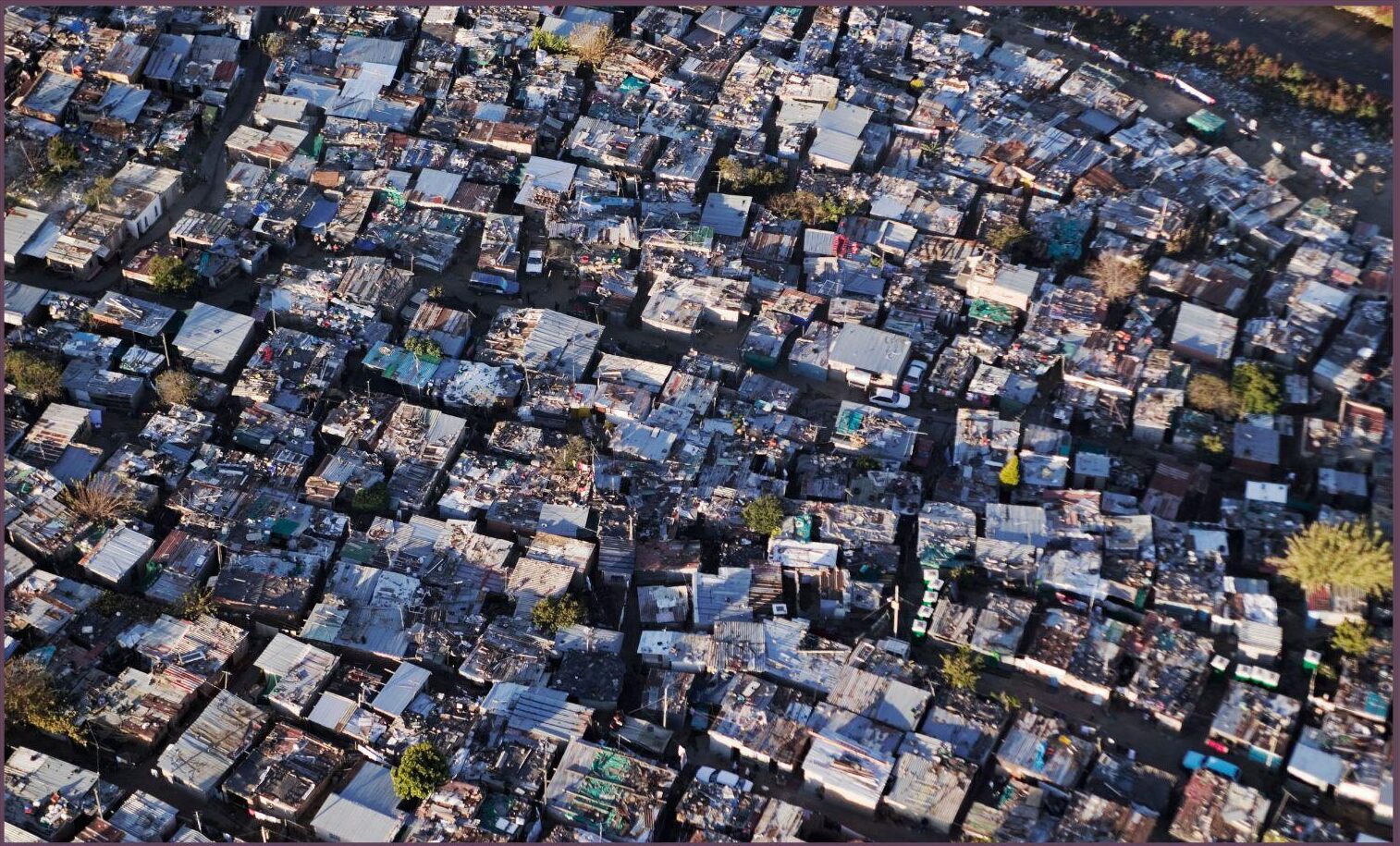
The Second International Migration Review Forum (IMRF) 2026 will be taking place in New York, from 5 to 8 May 2026. As the primary intergovernmental global platform, the IMRF reviews progress on the Global Compact for Safe, Orderly and Regular Migration (GCM). The main purpose of this forum is to discuss, review and identify challenges in GCM implementation, and set priorities for the next four-year cycle. As we prepare for this global meeting, it is important to remember that migration and mobility are never just about movement. They reshape spaces, rework identities, and redefine the boundaries of belonging, citizenship, and political community.
In this month’s ACMS Spotlight, we turn our attention to the Socio-Spatial Transformations research theme, which examines how social life and spatial regulation are being remade across African contexts shaped by mobility, urbanisation, and displacement. Bringing together multi-sited empirical research, critical theory, and innovative methodological approaches, the theme illuminates how everyday spaces—from neighbourhoods and cities to institutions and infrastructures—are produced, governed, and contested in an era of intensified movement. Through its diverse projects, public engagement, and collaborative scholarship, the Socio-Spatial Transformations team offers vital insights into the moral, material, and political consequences of mobility across the continent.
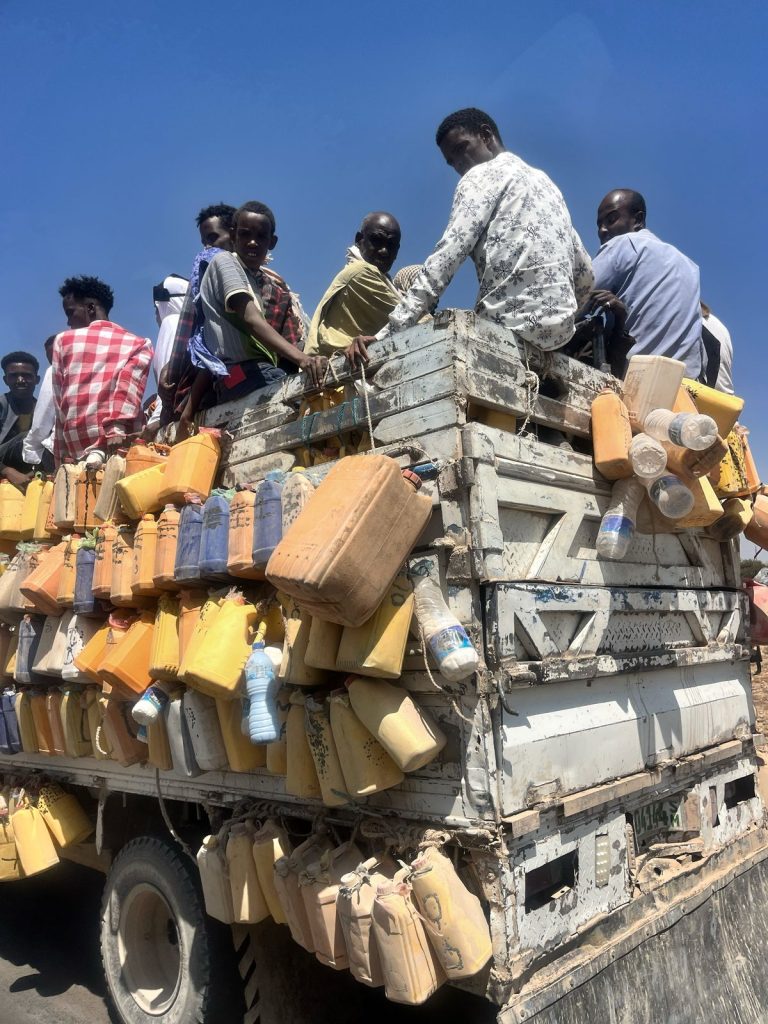
Socio-Spatial Transformations:
Why is this one of ACMS’s main thematic focus areas?
This theme explores the constitution of social subjectivities and citizenship across a diversity of African sites, whether origins, stations, or destinations for people on the move. At its heart is a concern over the meaning of socio-spatial regulation in an era of mobility. Drawing on quantitative, qualitative, and visual methodologies, it considers the material and moral transformations of spaces and institutions related to human movement. It surfaces poorly understood places and processes connected to the making of social, political, and ethical communities and boundaries.
Research produced by the team working on this theme includes multi-sited studies on mobility, urbanisation, and political possibilities and broader inquiries into the meanings of political community and identity within fluid, often translocal sites. Its researchers employ traditional quantitative approaches coupled with oral history, critical cartography, narrative analysis, eco-system mapping, and highly localised political ethnographies in Southern and Eastern Africa. Most work is conducted collaboratively with local and international partners, colleagues, and graduate students. Reflecting a diversity of interests, the results speak to multiple audiences across the social sciences and public domain.
Who are the team members working on this research theme?
 The South African Research Chair (SARChI) in Mobility and the Politics of Difference, Professor Loren B. Landau, is one of the senior researchers working under this theme. Landau is widely published in the academic and popular press on issues relating to migration policies, displacement, xenophobia and humanitarianism. His work currently explores comparative perspectives on how mobility is reshaping the politics of rapidly diversifying and expanding communities.
 Dr. Jean Pierre Misago is one of ACMS’s co-directors and a senior researcher on this thematic team. Misago’s research focuses on the effects of migration on identity and belonging; xenophobia and violent outsider exclusion; and the governance of migration and human mobility at different levels. He has published a significant and growing number of articles in international journals, book chapters in edited volumes, and research reports.
 Dr. Kabiri Bule is a researcher at ACMS whose research occupies a critical niche at the intersection of urban and migration studies, focusing on the profound impact of migration and human mobility on urban politics within African cities. Her work is dedicated to exploring how these dynamics influence notions of belonging, cultural diversity and mobility aspirations, particularly within African urban neighbourhoods that are in a state of constant flux.
 Dr. Balkissa Daouda Diallo is a postdoctoral fellow at the Centre. Her research focuses on African migrations and governance. She explores how international migration politics influence regional/domestic migration/mobility governance, informal governance, and the informality and precarity of mobility. She is also interested in structure-agency approaches to those on the move, and how belonging and identity influence migratory trends, migrants-host society relationships and gender dynamics in Africa.
 Dr. Silindile Mlilo is a migration scholar, practitioner, and consultant with extensive experience in research and project management at the intersection of migration and mobility governance, xenophobia and social cohesion, youth, and policy development across Africa and Asia. She is currently a postdoctoral fellow and project manager for the Xenowatch project.
 Postdoctoral fellow Dr. Brian Murahwa is an interdisciplinary urban researcher, whose interests lie at the intersection of theory and practice in the fields of urban planning and management; mobility and social cohesion; socio-spatial transformations; religious urbanism; and sustainable cities. His current work explores the urban Pentecostal geographies in South Africa.
 Carina Tenewaa Kanbi is a PhD candidate under the African Research Universities Alliance (ARUA) Mobility and Sociality in Africa’s Emerging Urban programme, based at the ACMS. Her doctoral thesis is titled ‘The West African Wave: Understanding Creative Cosmopolitanism, Lifeworlds, and Mobility within the Continent’s Cultural Capitals’.
This team is also made up of interns who support the Socio-Spatial Transformations theme projects; Jaclyn Modise, Reabetswe Maputla and Shosho Myezi.
What are some of the main research projects under this theme?
This theme incorporates the work of the SARChI in Mobility and the Politics of Difference, and the following research projects: Xenowatch, Mobility Governance Lab (MGL), Atlas of Uncertainty, and Movement Building for Migrant Rights in South & Southern Africa.
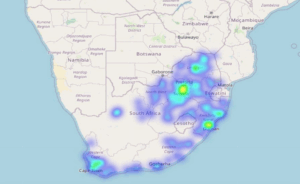 Heat map of xenophobic discrimination in South Africa per province, from 2022 to 2024.
Launched by ACMS in 2016, Xenowatch is an open-source platform for collecting, visualising, and interactively mapping information and data on xenophobic discrimination in South Africa. It allows crowdsourcing of information through email, WhatsApp, and phone calls. Xenowatch tracks, verifies, and analyses all incidents of xenophobic discrimination, along with responses from government and civil society. The MGL project explores the governance of mobility at multiple scales across the global south. It is an autonomous, critical space working to realise principles of innovation, independence, and equitable partnership. Through collaborative research, it offers original insight and perspectives to scholars, civil society, and practitioners while fostering the next generation of engaged researchers from Africa and beyond.
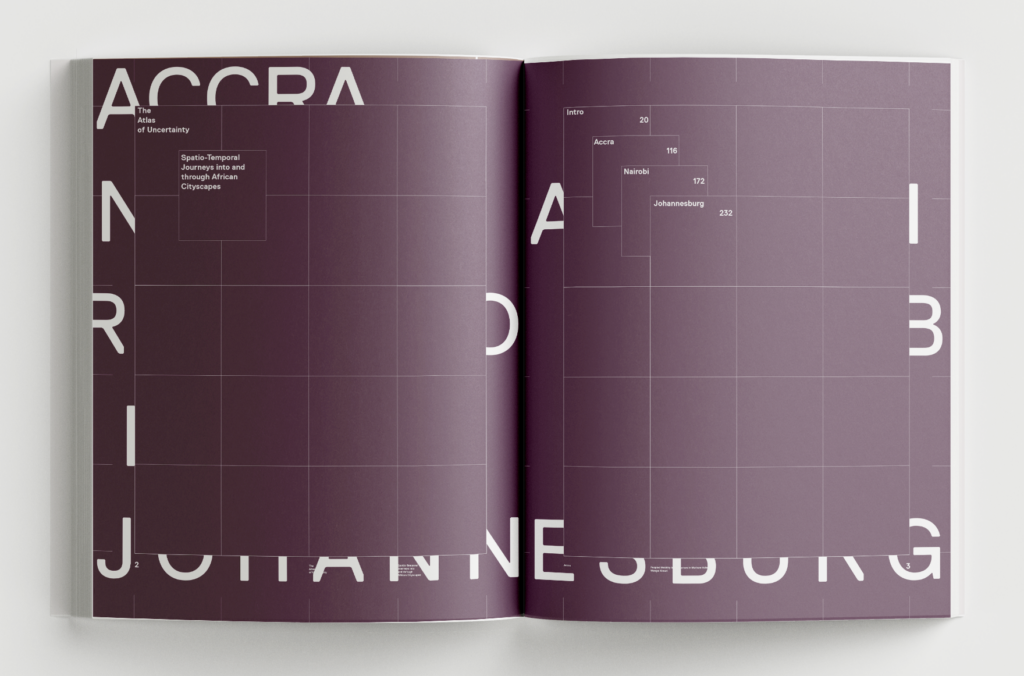 Pages from the Atlas of Uncertainty publication.
The Atlas of Uncertainty is a publication, an exhibit, and a digital platform. It integrates written essays, visual art, sound, and critical cartography. Created dialogically, it offers layered and nuanced understandings of transforming urban spaces and the moral and material economies that bind them. It is at once a tool of knowledge communication and a reflection on what we believe and how we know it. The Atlas aims to move from the ‘census’ to the ‘senses’ evoking sensorial and embodied experiences of the material, in ways that challenge traditional ways of representing African cities. The Movement Building research project investigates the viability of movement building for migrant rights in the South African context characterised by growing xenophobic populism and discrimination, as well as push-back by an active, albeit fragmented civil society ecosystem. The project seeks to define strategic and proactive advocacy for migrant rights, identify engagement strategies with various partners, and support the migrant sector in crafting new narratives and long-term strategies to shift policy perspectives, for a more effective protection of migrants’ rights in the country.
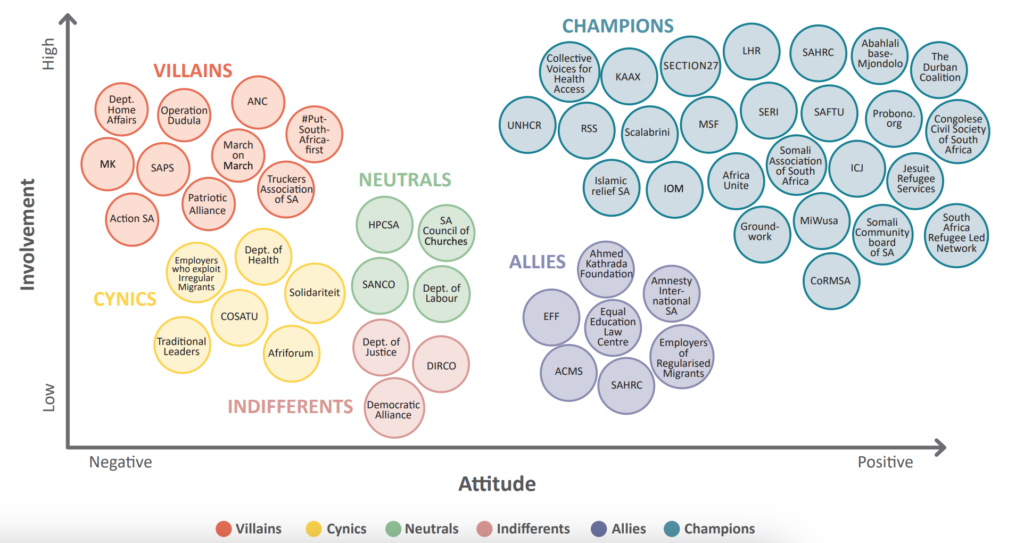 Migrant sector stakeholder mapping for 2025, as illustrated in the Movement Building project report (January 2026).
What are some of this theme’s recent events or accomplishments?
Xenowatch’s Dr Silindile Mlilo and Prof. Loren Landau participated in a pivotal preparatory session for the 2026 International Migration Review Forum (IMRF), on ‘Advocacy Planning Amidst Global Dialogue Processes’, held in Johannesburg on 9 December 2025.
Organised by the African Non-State Actors Platform on Migration and Development, with Friedrich-Ebert-Stiftung (FES) and Lawyers for Human Rights, this gathering focused on shaping a unified “African agenda for IMRF 2026.” The session brought together a strong mix of researchers, advocates, and policy thinkers to interrogate Africa’s positioning ahead of IMRF 2026.
Prof. Landau presented online on “Geopolitics, shifts in the global order, wars, funding and impact on human rights and mobility,” framing the urgent challenges within the current global landscape.
Reflecting on the session, Dr. Mlilo noted:
“I found the meeting highly informative and impactful, as it created a valuable platform for participants to share insights on the global dynamics of migration and their concrete implications at the local level. The discussions enabled frank and constructive exchanges on contextual migration challenges, while also centring local experiences as critical sources of knowledge to inform global policy conversations. Importantly, the meeting highlighted the importance of visibility and representation of civil society and academic voices in the GCM/IMRF process, which helps to bridge the gap between grassroots realities and international decision-making.”
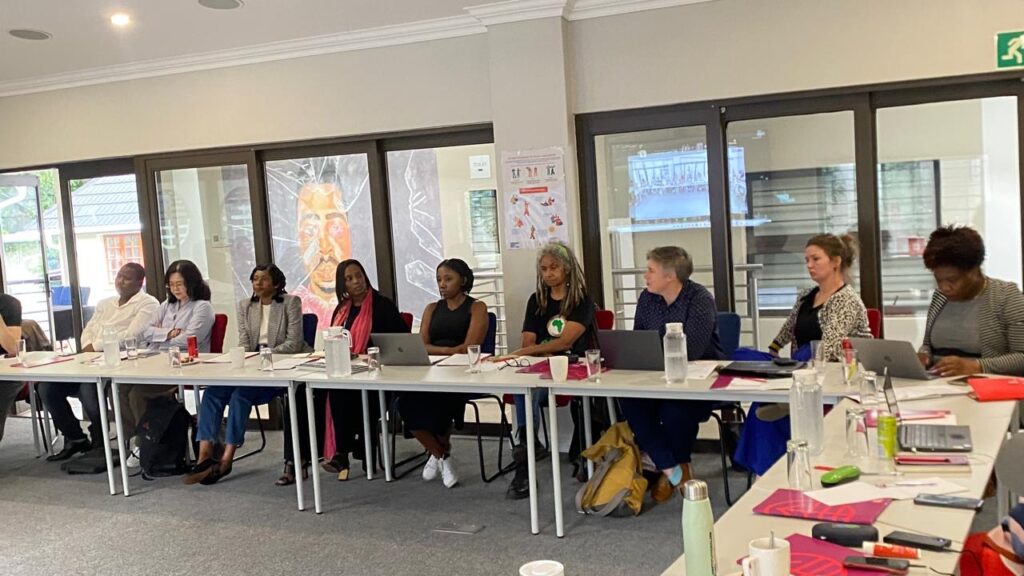 Dr. Mlilo (third from left) is seen here attending the GCM/IMRF Preparatory Session.
This session marks an important step in ensuring robust civil society, trade union, and diaspora input into Africa’s position for the Global Compact for Migration implementation review.
What are some of the team’s latest collaborative publications?
And here are some of the most recent publications to be produced by the Socio-Spatial Transformations research team:
- Bule, K. & Landau, L.B. (2025). Mobility, diversity, and speculative racial capital: Navigating inclusion and exclusion in an African urban gateway. Third World Quarterly.
- Kanbi, C.T. & Bule, K. (2025). Learning from Africa’s adaptation: Urban life is being built not just through infrastructure, but through improvisation and social intelligence. Nature Africa.
- Murahwa, B. and Misago, J.P. (2025). Group Tensions and Informalisation of Community Leadership: Exploring Factors Affecting Social Cohesion and Collective Violence in Makhanda, Eastern Cape Province, South Africa. ACMS, November 2025.
- Richter, M., Walker, R., Freemantle, I. & Misago, J.P. (2026). “This fight is for all of us” – Movement Building for (Migrant) Rights in South Africa – Culmination Research Report. ACMS, January 2026.
- Landau, L.B. & Bule, K. (2026). City-Making in Africa’s Urban Estuaries: Rescaling African Urban Policy Analysis in an Era of Mobility. In Global Urban Policy: A Framework for Analyzing State and Society. University of Michigan Press.
To learn more about this theme and its latest work, see here: Socio-Spatial Transformations.

0 Comments