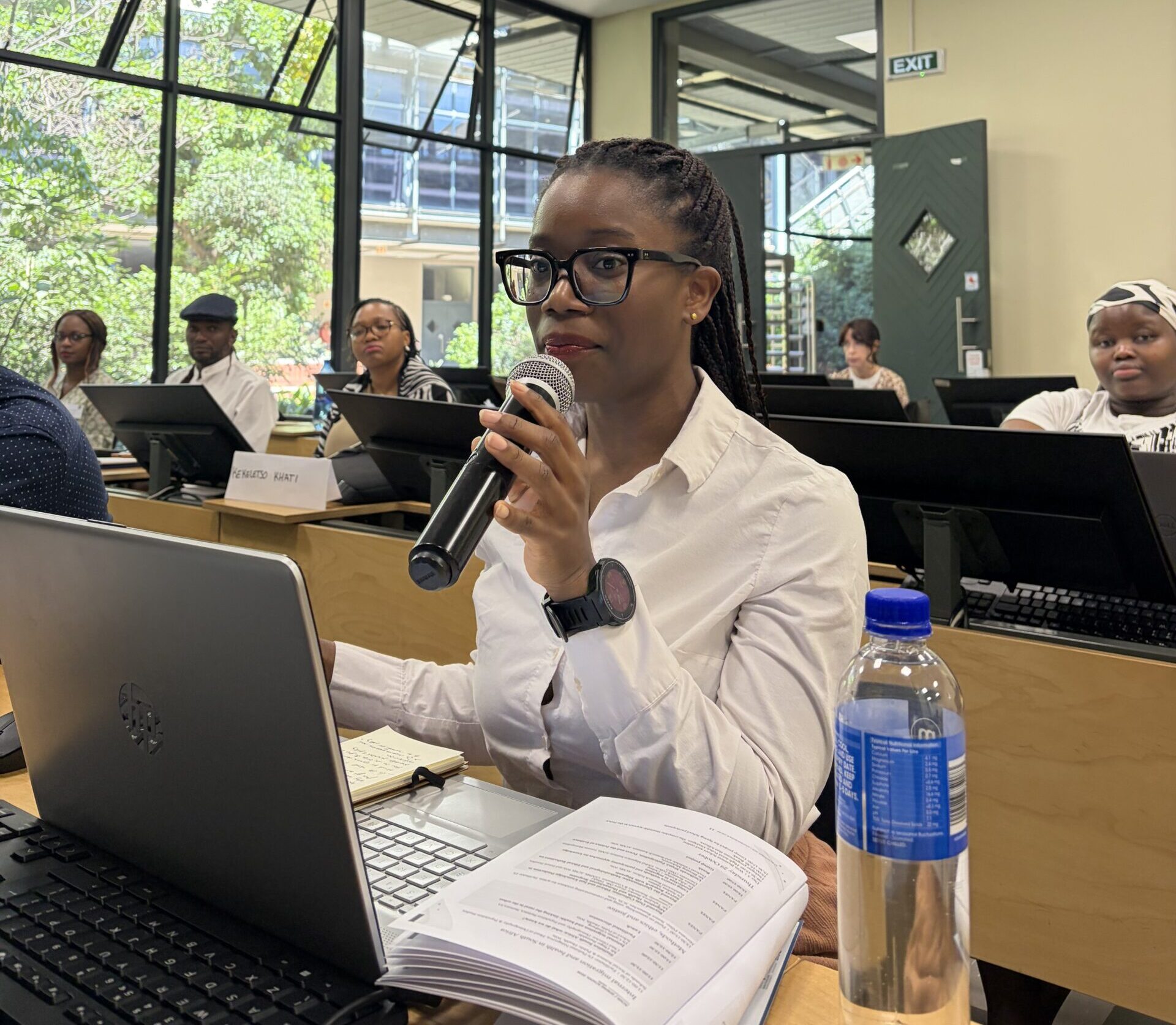
Speakers and participants joined us yesterday in person and online for the second day of our hybrid Spring School, exploring a central question: How can universal health coverage be meaningful for people on the move?
In the opening session, facilitated by Dr Lucy Khofi, Dr Santino Severoni examined health systems that respond to migration and displacement. Dr Kolitha Wickramage highlighted the importance of intersectoral action, sustainable financing and research that addresses neglected priorities. Dr Janine White brought a South African perspective, asking “Universal for whom?” and examining the gap between formal protections and everyday access to care.
The session on internal migration, facilitated by Dr Pedzisai Ndagurwa, widened our focus beyond international borders. Mr Diego Iturralde highlighted the role of population data in understanding mobility and planning services, while Dr Carren Ginsburg shared longitudinal research connecting rural and urban lives, gender, health and continuity of care.
In the afternoon, Dr Nirvana Pillay facilitated a panel on methods, ethics and justice. Tafadzwa Stanley Zauya centred ethical and just knowledge production; Dr Sostina Matina explored methodological and ethical questions in survey research; Dr Alka Kumar brought creative and participatory approaches into focus; and Blessing Mukuruva’s contribution connected participation, power and the politics of evidence.
A key contribution of the day was connecting health-system inclusion with how evidence is produced, interpreted and used. Better data must be accompanied by trust, community participation, accountability and institutions capable of translating commitments into equitable care.
Thank you to our speakers, facilitators and participants, both in person and online, for a rich second day. We carry these conversations into the Policy Dialogue on migration, urbanisation and people’s health.
0 Comments