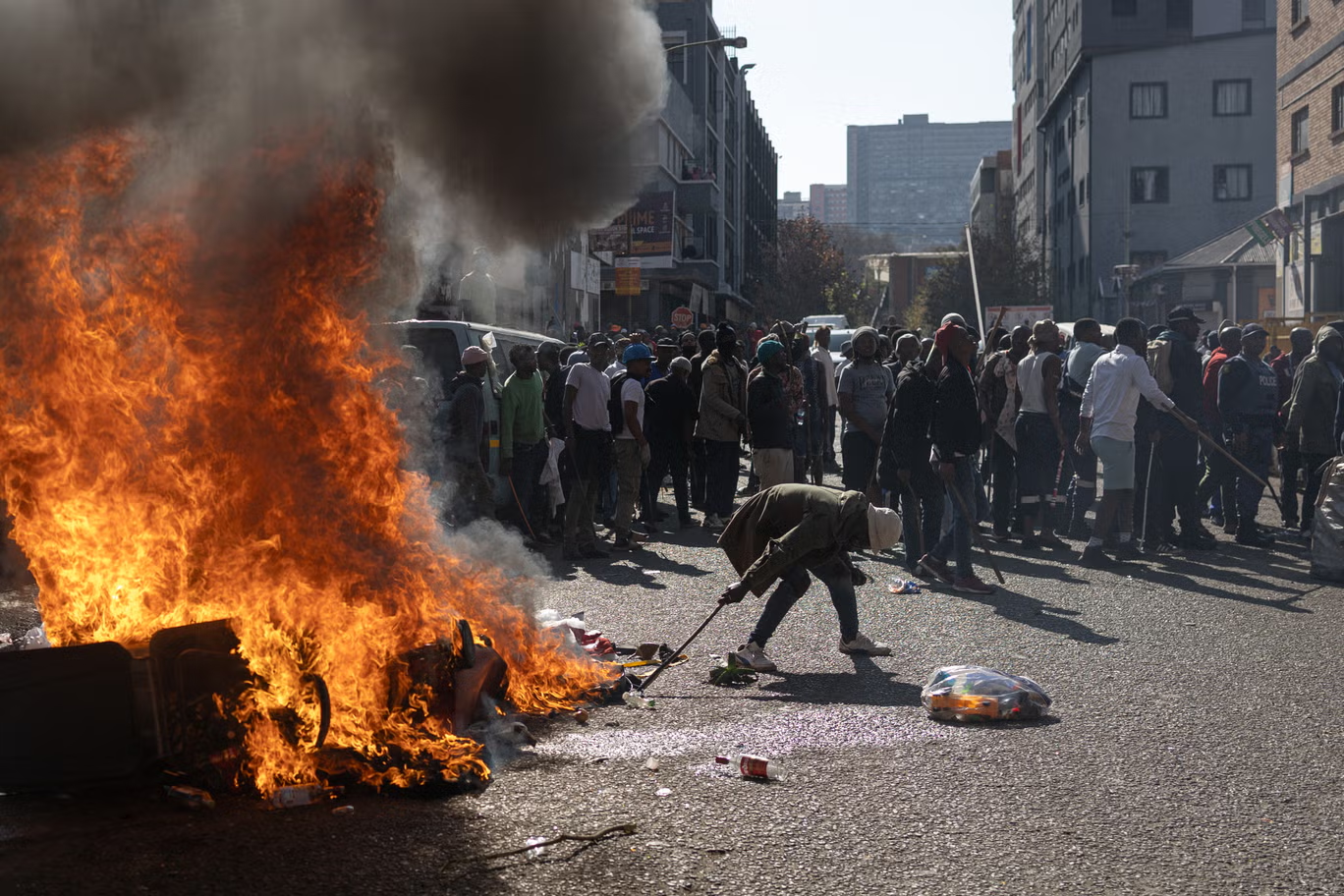
South Africa is once again confronting a wave of anti-migrant mobilisation that has displaced thousands of people, disrupted communities, and reignited difficult questions about xenophobia, political leadership, and social cohesion. Experts tell Alex Croft of The Independent that the latest demonstrations threaten the foundations built after apartheid: Mandela’s dream of ‘rainbow nation’ shaken by wave of deadly anti migrant protests (5 July 2026).
The recent article explores how these protests differ from previous outbreaks of anti-migrant violence, arguing that they are more coordinated, politically connected, and strategically organised than before.
Professor Jo Vearey of the African Centre for Migration & Society (ACMS) at the University of the Witwatersrand (Wits University) argues that the current mobilisation should not be understood as a spontaneous public reaction to economic hardship. Instead, she points to a far more organised political project.
“This time it’s different, the coordination of these protest marches nationally across all the big cities, and the money behind this movement.”
According to Vearey, the scale, coordination and resources involved indicate that these demonstrations are not simply grassroots expressions of frustration.
“This isn’t sort of a grassroots mobilisation, this is something that is a very clearly organised and manipulated space.”
The article situates these developments within South Africa’s deep socio-economic challenges, including persistent unemployment, poverty and inequality. While these conditions create fertile ground for public frustration, Vearey cautions against allowing migrants to become convenient scapegoats for structural failures.
She also raises concerns about the political interests driving the mobilisation. As municipal elections approach, anti-migrant rhetoric has become increasingly visible within mainstream political discourse, with several political actors accused of amplifying misinformation and exploiting public anxiety for electoral gain.
Vearey argues that the beneficiaries of this strategy are not ordinary South Africans.
“This popular rhetoric has really gained momentum, but essentially the leaders of these movements are the ones who are benefiting.”
The article also recalls the warning issued by Nelson Mandela three decades ago, when he urged South Africans not to blame foreigners for the country’s problems and called for a legacy of African solidarity. Today, that vision is being tested as misinformation, organised mobilisation, and political opportunism increasingly shape public debate on migration.
Vearey’s analysis offers an important reminder that migration itself is not the root cause of South Africa’s crises. Rather, the current wave of anti-migrant mobilisation reflects how structural inequality, weak governance, and electoral politics can be harnessed to redirect public anger towards some of the country’s most vulnerable communities.
As South Africa navigates the months ahead, her warning is clear: understanding who is organising, funding and benefiting from these campaigns is essential if the country is to address both xenophobia and the deeper structural challenges that continue to fuel it.
For the full article, visit The Independent: Mandela’s dream of ‘rainbow nation’ shaken by wave of deadly anti migrant protests.
[Featured image caption and credit: Protesters gather outside a building they believe is occupied by undocumented foreign nationals during a demonstration by the ‘March and March’ and Operation Dudula movements (AFP/Getty).]



0 Comments