We are watching a de facto refugee camp form under our noses, assembled not by the chaos of mobs but by the order of officials with stamps and clipboards and the quiet confidence of those who know that no one is watching.
There is a hidden humanitarian crisis unfolding at South Africa’s border with Zimbabwe. Fifteen kilometres outside Musina, on farmland previously used by the Department of Agriculture, the government has built what it calls a “temporary repatriation processing centre (TRPC)”. It is a camp.
The predominantly Malawian and Zimbabwean men, women and children inside it are victims of failures of the South African state. They are there because the same state that is now holding and processing them failed, for years, to hold political leaders accountable for driving anti-foreigner sentiment. It failed to effectively manage immigration and refugee protection by allowing mismanagement and corruption to destabilise the Department of Home Affairs (DHA). And, most recently, it has failed to counter the deadly misinformation, xenophobic hate speech and incitements to violence repeatedly spewed by anti-foreigner movements and vigilante groups. Now, having created this crisis, the state has resolved to manage it somewhere out of sight, relying on its response to be out of mind as well.
During the build-up to 30 June, the number of buses arriving increased – including those with no permits to travel across the border and drivers without passports – and delays and confusion in procedures for obtaining group passports became apparent. Many Zimbabweans also started arriving in Musina. People seeking safety were then moved and abandoned at the Musina Showgrounds, which has served as a temporary holding facility. While coordination to provide basic needs at the showgrounds has been led by NGOs, support has also been provided by faith-based, community-based and refugee-led organisations. These organisations are overwhelmed, and people have been left at the showgrounds without food, shelter and basic services.
Processing – if you can call it that – had been taking place in Musina town and at the border. Those with passports or part of a group passport moved through Immigration at the civic centre or through the Border Management Authority at the Beitbridge border post; those with asylum seeker permits or no documentation at all moved through the Refugee Reception Office. This processing is now to be undertaken at the TRPC. Different desks, different officials, but the same outcome for everyone regardless of documentation status. The stamp reads “Undesirable”. The ban to re-enter South Africa is five years.
This includes documented people with the right to remain in South Africa – those who have built lives here, are part of communities and networks, and whose children know no other home. They are also being designated “undesirable”, raising further questions about the application of law and due process.
On 30 June, while we were distracted by the marches, mobilisations and – albeit less than feared – violence in South Africa’s cities, townships and outlying areas, the state silently enacted a part of the White Paper on Citizenship, International Migration and Refugees. The White Paper has not yet been enacted into law. But policy, in this country, has never waited politely for legislation. Despite the serious concerns raised in public submissions, the White Paper envisages an inhumane approach to the management of migration and refugee protection, including creating a single refugee reception centre in Musina. What has quietly been built on remote farmland over the past week is that centre, in all but name: a de facto refugee camp to hold foreign nationals far from the public eye. This humanitarian crisis is not incidental to the crisis in cities and townships. It runs parallel. And unlike the violence in the streets, it bears the full authority of the state.
On 1 July, the TRPC opened and about 1,200 people were bused from the showgrounds to the site. All new arrivals in Musina will now be directed to the TRPC which the DHA states can accommodate up to 20,000 people. Access requires travel along a tar road, then about 8km on gravel. Reports highlight concerns that the rapidly constructed tents and amenities are inadequate, that coordination challenges remain, there is confusion regarding processing and onward travel, and mechanisms for providing food, basic health services and safe hygiene lack clarity. Whether awaiting repatriation or deportation, whether documented or not, everyone is in the same position. Stranded and in limbo. Particularly concerning are reports that poor connectivity at the site is preventing officials from completing the online processing required to facilitate onward travel – the very basis on which the TRPC has been established.
The government calls the centre temporary. What is being built is permanent – the physical manifestation of a policy proposal that is still, legally, only a proposal.
Let us be clear: a response was necessary. Thousands of people stranded without food, shelter or basic services is a humanitarian crisis that demands intervention. The question is not whether the state should have acted. It is how it has acted and, crucially, how little anyone knows about what is being done in its name. The opacity here is not incidental. Reports from those physically present in Musina indicate that even they cannot get clear answers about processing timelines, rights protections or what happens to people once they pass through the centre’s gates. When those closest to a crisis cannot account for what is happening inside it, it is more than disorganisation – it is a feature. A response shrouded in confusion and a lack of transparency sets a precedent that will outlast this crisis – and the next government will inherit a template for managing people outside the law that has been road-tested, with no one having been held to account for it.
The statement made by the government on the evening of 30 June opened by thanking South Africans for protesting “peacefully and responsibly”, commending “organisers” and “community leaders” for their “commitment to peace”. These are, in the main, the people whose movement set the conditions for the burning, the looting and the terror visited on non-nationals across the country and who have laid out a plan for continued, and likely increasing, mobilisation. The government was not managing the aftermath of Tuesday’s marches. It was expressing gratitude for them. We saw the WhatsApp videos of burning cars and frightened people being pulled from their homes. We saw foreign nationals seeking safety outside embassies, shops being looted, families displaced. And we know that the South African Police Service stood by – and in some cases participated – while the November 2025 Kopanang interdict – prohibiting exactly this, was violated with impunity.
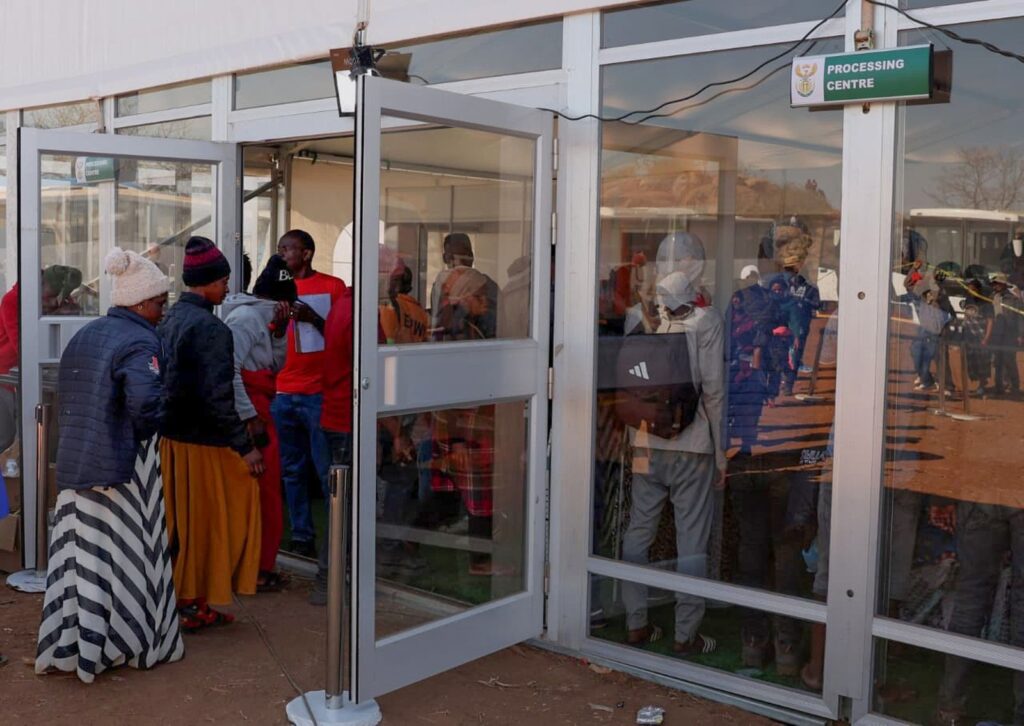 The temporary repatriation processing centre in Musina, Limpopo, on 2 July 2026. (Photo: Siyabulela Duda / GCIS)
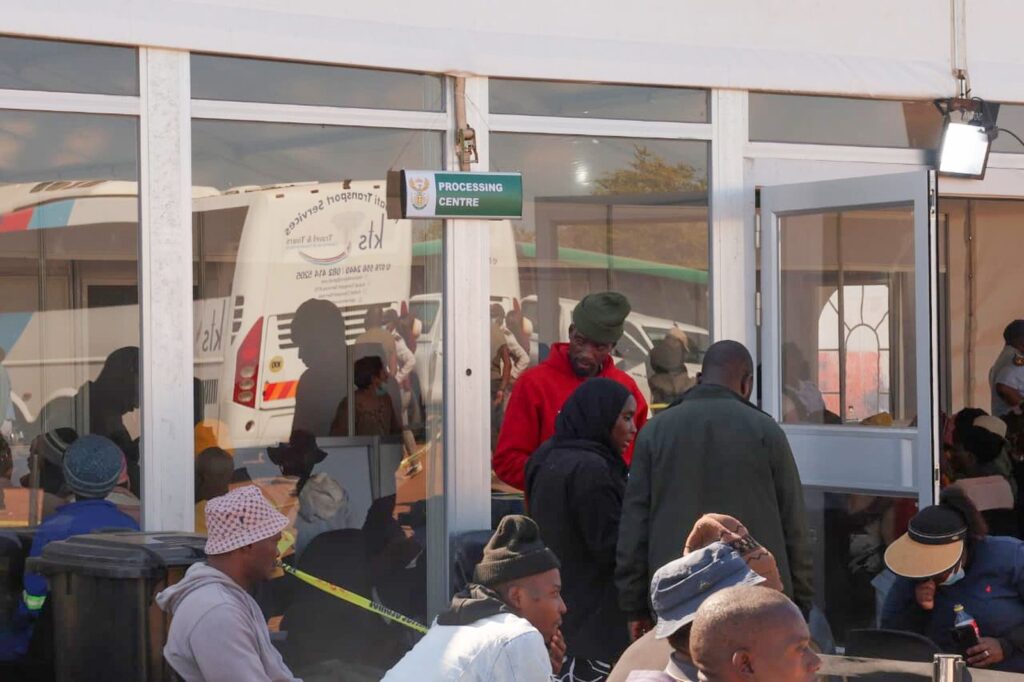 People queue at the temporary repatriation processing centre in Musina on 2 July 2026. (Photo: Siyabulela Duda / GCIS)
As March and March escalates – promising more marches, more demands, more fragmentation of communities, families and livelihoods – the government has found its perfect cover to enforce what has not yet been legally sanctioned. President Cyril Ramaphosa calls it the “Comprehensive Approach for Migration Management”. It has five pillars: enforce laws, secure borders, root out corruption, close legal loopholes and strengthen regional diplomacy. It is the White Paper with a presidential seal and a press release – implemented right now, without the required legislation.
The 30 June statement told us that 4,286 people have been “repatriated” and a further 419 “deported” in the past few days alone – presented with pride. It does not tell us how many had valid documentation, asylum permits, passports or children in South African schools. It does not use the word “banned”. It uses “repatriated” – a word that implies a homecoming, a return to where one belongs, rather than a forced removal from the place where one has built a life.
The statement also assures us that “enforcement actions are carried out within the framework of the Constitution and the law”. It does not explain how enforcing the provisions of a bill – not yet an act – can be constitutional. Constitutional compliance is being asserted. It is not being demonstrated. It also does not say that those commitments were only made after Kopanang Africa Against Xenophobia and Lawyers for Human Rights brought urgent proceedings before the KwaZulu-Natal High Court on 26 June, compelling the state to publicly reaffirm obligations it should not have needed to be reminded of.
Make no mistake: this is more than politically convenient. The scapegoating of migrants serves its oldest purpose: it redirects a country’s fury away from the failures of its own government, away from unemployment and load shedding and crumbling infrastructure, and directs it at the easiest, often most vulnerable target – the foreigner, the outsider, the one who is perceived not to belong. But the violence is not just convenient. It is useful.
We are watching a de facto refugee camp form under our noses, assembled not by the chaos of mobs but by the order of officials with stamps and clipboards and the quiet confidence of those who know that no one is watching.
The marches of 30 June have passed, and the news cycle will move on. Yet the people held at the border today will still be there – or will have been bureaucratically removed without spectacle. The White Paper will have been road-tested and its machinery oiled. And when it is eventually enacted, it will be the formalisation of what was already being done under the guise of an emergency while everyone was looking elsewhere.
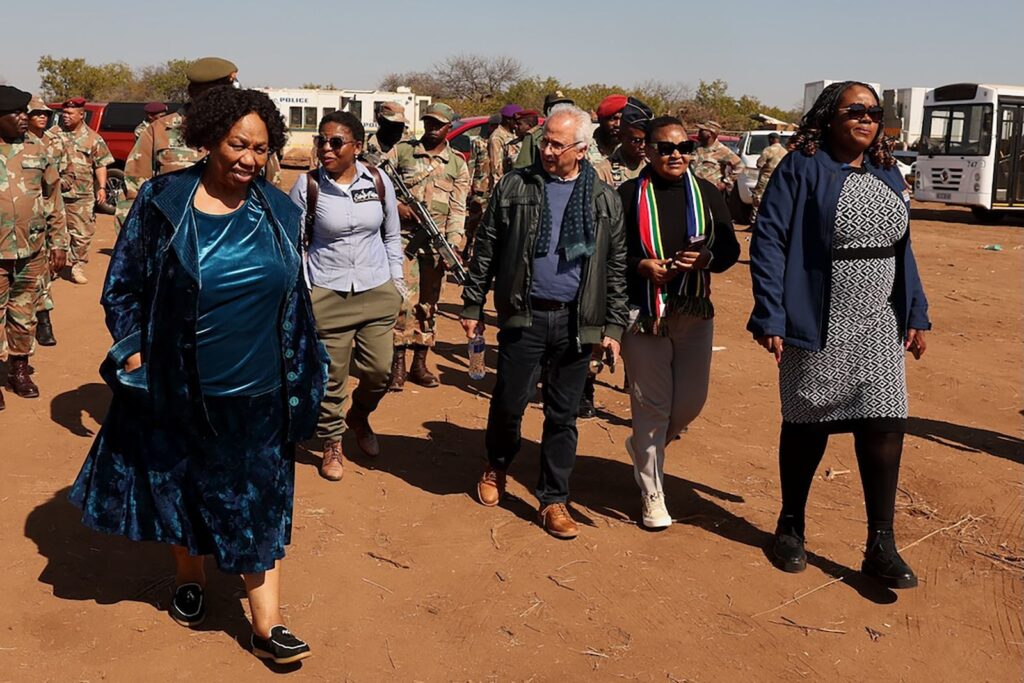 Defence Minister Angie Motshekga, Minister in the Presidency Khumbudzo Ntshavheni, Acting Police Minister Firoz Cachalia, Deputy Police Minister Polly Boshielo and Justice Minister Mmamoloko Kubayi conduct a monitoring visit at the temporary repatriation processing centre in Musina and the borderline of the Beitbridge port of entry in Limpopo on 2 July 2026. (Photo: Siyabulela Duda / GCIS)
This is the other red herring of 30 June. We were given a date to fear – and the date is real, the violence is real, the terror non-nationals are living through is real. But the date is also a frame. It marks a beginning, not an end. March and March has said as much: what they called for is not an event; it is a campaign. The government’s response to that campaign is not, at its core, protective. It is parallel. The state performs enforcement in the cities under the language of protection. It performs enforcement at the borders under the language of procedure. The non-national is squeezed from both ends, by citizens and by the state, and the only difference is which one will be prosecuted for it.
To watch only the spectacle of marches, however real, however urgent, is to watch what we are meant to watch. The White Paper is being enacted in real time, in the gap between what the state says it is doing and what it is actually doing. What is happening at the border is not a response to a crisis. It is a crisis – created and executed by the state. The state depends on our distraction to complete this.
Now is the time to fix our gaze on what we are not meant to see.
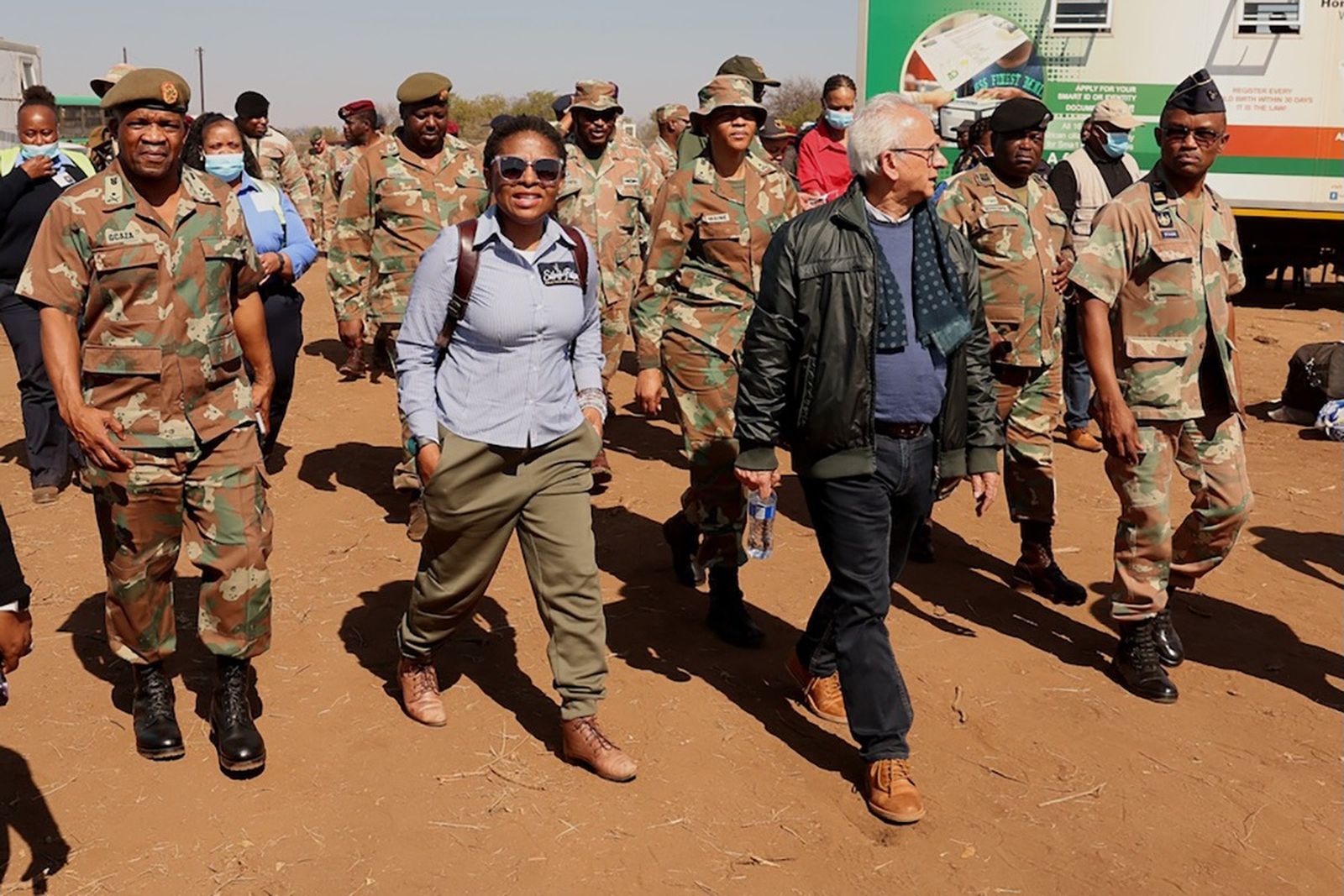
[This news article was originally published on The Daily Maverick, under the same title, and along with the featured photographs, on 5 July 2026. Main photo credit: Minister in the Presidency Khumbudzo Ntshavheni and Acting Police Minister Firoz Cachalia on a monitoring visit at the temporary repatriation processing centre in Musina, Limpopo, on 2 July 2026. (Photo: Siyabulela Duda / GCIS).]

0 Comments