
This week Statistics South Africa (StatsSA) released its Report on Migration Statistics from the 2022/2023 Income and Expenditure Survey (IES). The study estimates that there are about 3 million immigrants (5,1% of the overall population) in the country, the majority of whom hail from countries within the Southern African Development Community (SADC). The survey also notes that most immigrants are male (56,2%), outnumbering females (43,8%).
 While such country statistical reports and demographic indicators are useful, they provide little insight into how gender, sexuality and other social variables shape, and are shaped by, migration. They also fail to capture the fluid and diverse lived experiences of sexual and gender minorities. The ACMS recognises that gender and sexuality – alongside other axes such as race and (dis)ability – should never be treated as secondary considerations. Rather, they are foundational to the construction of moral orders, the enforcement of socio-cultural borders and the political negotiation of belonging. In doing so, they shape who is regarded as deserving or legitimate, while also revealing the intersectional power relations embedded within migration governance. Which is why, this month, we shine the ACMS spotlight on the Moral B/orders & the Politics of Belonging research theme and team.
Why is this one of ACMS’s main thematic focus areas?
Gender and sexuality are central to how societies define membership and belonging. As such, they have long shaped when, how and for which purposes people can move. Border regimes tend to operate in tandem with moral regimes, with access to territorial space and political rights contingent upon adherence to societal expectations. Within these frameworks, migrants are evaluated, disciplined and assigned worth according to whether they conform to or deviate from normative expressions of gender and sexuality.
This research theme foregrounds the normative, symbolic and power-laden dimensions of migration that cannot be captured by economic or demographic analysis alone. Migration is not only about physical movement or territorial boundaries; it is also about who can claim belonging, on what terms and with what consequences. While explicitly pro-/anti-migration rhetoric can reveal much about social attitudes and political institutions, it does not always offer an accurate account of everyday practices and sites or modes of contestation.
The ACMS is committed to examining the less visible facets of human mobility, including its discursive, embodied, affective and material components. Recognising how moral b/orders (i.e. borders and orders) are produced, enacted and justified is crucial for understanding the power relations – both overt and subtle – that regulate human mobility and shape access to housing, education, livelihoods and other basic rights. At the core of this thematic is the question of why certain individuals/groups are deemed deserving of protection while others are demonised or criminalised, as well as how particular bodies, identities or expressions come to be marked as threatening or polluting. Put differently, this thematic explores how socio-political categories morph across space and time, both in terms of the meanings attached to them and how they are claimed, signified and potentially reconfigured.
Who are the team members working under this research theme?
 John Marnell is a postdoctoral researcher at the ACMS. He is the author of Seeking Sanctuary: Stories of Sexuality, Faith and Migration (Wits University Press, 2021) and the co-editor of East Africa Queer and Trans Displacements (Bloomsbury Academic, 2026) and Queer and Trans African Mobilities: Migration, Asylum and Diaspora (Zed Books, 2021), which won the 2023 ASR Best Africa-focused Anthology or Edited Collection Prize. John is the co-convenor of the African LGBTQI+ Migration Research Network (ALMN).
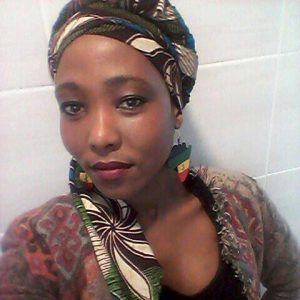 Ntokozo Yingwana is a doctoral researcher and the communications coordinator for the centre. Her experience and skills are in journalism, online media, advocacy, open access/knowledge and research. However, her main passion lies in gender, sexuality and sex worker rights’ activism in Africa. She has published extensively on this subject matter, with her paper titled ‘Queering Sex Work and Mobility’ winning the 2022 Queer African Studies Association (QASA) Award for the best essay by a graduate student.
What are some of the main research projects under this theme?
 The most recent major initiative to come of this theme is the formation of the African LGBTQI+ Migration Research Network (ALMN). ALMN aims to advance scholarship on all facets of LGBTQI+ migration, by bringing together scholars, researchers, practitioners, activists and service providers to spark critical conversations, promote knowledge exchange, support evidence-based policy responses, and initiate effective and ethical collaborations.
One of the main ALMN projects was Bodies at the Borders, which investigated LGBTQI+ refugees’ efforts to navigate informality and insecurity in urban Nairobi. The project also explored the impacts and meanings of this population’s increasing visibility and strong digital presence, not only for Kenya and other East African reception countries but also for global protection structures.
The Vulnerability Amplified project captured baseline quantitative data on LGBTQI+ migrants and asylum seekers. This was achieved by rolling out three anonymous surveys administered via WhatsApp. As well as capturing basic demographic information, the surveys posed simple questions about participants’ gender, sexuality, documentation status, reason for migrating and experiences of harassment and/or violence. The data collected showed that South Africa hosts significant numbers of LGBTQI+ migrants and asylum seekers – something long suspected but difficult to prove. It also revealed that this population is more dispersed and diverse than previously thought.

What are some of the research team’s recent publications, events or accomplishments?
Marnell led the editorial team that recently published the open access collection – East African Queer and Trans Displacements – which offers the first in-depth examination of queer and trans displacement in the region. Bringing together diverse case studies and interdisciplinary perspectives, this collection features original creative works by queer and trans diasporic writers and artists with first-hand experiences of displacement. Join the online launch of this book collection on Monday, 2 March, 15:00 (UK time). Click here to RSVP for the event: https://tinyurl.com/2ypnjufs.
 Marnell was also one of the joint recipients of the 2025 QASA award for best published scholarly essay by a graduate student award for his paper: ‘Radical Imaginings: Queering the Politics and Praxis of Participatory Arts-Based Research.’ In this paper Marnell investigates how participatory action research (PAR) can be queered through arts-based methodologies. Drawing on work with participants from the African Centre for Migration and Society’s MoVE (methods:visual:explore) project, Marnell demonstrates that this queering of PAR enables participants to use artistic practices to reflect on the complexities and contradictions of their lives and experiences, rather than seeking artificial coherence within them.
Yingwana’s latest publication is an entry in the Palgrave Encyclopedia of Sexuality Education on ‘Sex Work in Africa’. The living reference traces the historical evolution of sex work across the continent—from precolonial systems and colonial economies to contemporary urban and migratory contexts—while analysing how legal regimes (criminalisation, partial criminalisation, legalization, and decriminalisation) shape sex workers’ rights and vulnerabilities. Yingwana also one of the winners of the Canon Collins Change Makers Award for the Mothers and Caregivers in Sex Work project. In partnership with Mothers for the Future (M4F) a support group for sex working mothers in South Africa, this feminist participatory action research (FPAR) project not only seeks to understand the parenting needs of mothers who sell sex and those who take care of their children, but also implement some of the findings from the pilot phase.


0 Comments