• EU “refugee crisis”: Responses East and West and beyond

    Humanities Graduate Centre Seminar Room, South West Engineering Building, University of the Witwatersrand East Campus

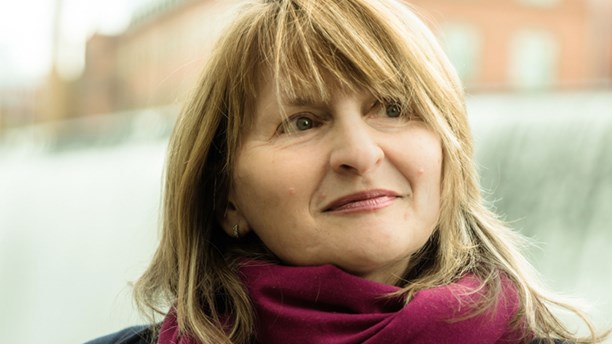
    As part of the Lunchtime Seminar Series, the African Centre for Migration & Society presents a seminar by Branka Likic-Brboric who is an Associate Professor at REMESO (Institute for Research on Migration, Ethnicity and Society), Department of Social and Welfare Studies, Linkoping University. The presentation addresses the recent “refugee crisis” in the EU, diverging responses between “old” and “new” member states and subsequent streamlining towards deterrent migration policy, rising xenophobia and populism. Against the background of the development of the EU’s enlargement and migration policy, multiple gaps between policy goals and outcomes are identified, giving rise to anti-migration responses and challenging EU project in general. It is argued that the EU needs an institutional rebalancing in terms of an alternative that promotes European solidarities, social protection, "decent work" and a right-based mobility/migration regime. Biography Branka Likic-Brboric is Associate Professor at REMESO (Institute for Research on Migration, Ethnicity and Society), Department of Social and Welfare Studies, Linkoping University. Her research encompasses the following interconnected areas: 1) globalisation and the political economy of post-socialist transformations; 2) EU enlargement, informal economy, new migrations and the European Social Model; 3) global governance, migrants’ rights and "decent work"; 4) comparative studies on citizenship and immigrant integration. The combined research in these […]
  • Internationalizing informality: Work, precarity and vulnerability

    Diakonia Conference Centre, Durban

    The African Centre for Migration & Society, together with the International Labour Organisation (ILO) and the South African Labour Bulletin (SALB) will be hosting a dialogue on Internationalizing Informality: Work, Precarity and Vulnerability. The goal of the dialogue will be to develop new advocacy strategies, to bring new partners into the conversation and to provide a broader lens for understanding labour migration in the region and strategies to better protect migrant and local low skilled workers. Key speakers have been invited from trade unions, government, and civil society to make presentations that will feed into a wider discussion. Speakers include: Pat Horn, Women in Informal Employment: Globalizing and Organizing (WIEGO) Mandla Masuku, General Secretary at Migrant Workers Union of South Africa (MIWUSA) Professor Branka Likic-Brboric, Associate Professor at REMESO, Institute for Migration, Ethnicity and Society, Linköping University Percy Masuku, Public Services International (PSI) For logistical purposes, please RSVP to dialogues@migration.org.za by 9 February 2017.  Date: 22 February 2017 Time: 10:00 - 12:00 Venue: Diakonia Conference Centre, Durban

  • “We are at war with the Devil”: Politics of exclusion of LGBTI groups amongst conservative Christian groups in Uganda

    ACMS Seminar Room 2163, South East Wing, Second Floor, Solomon Mahlangu House, University of the Witwatersrand East Campus

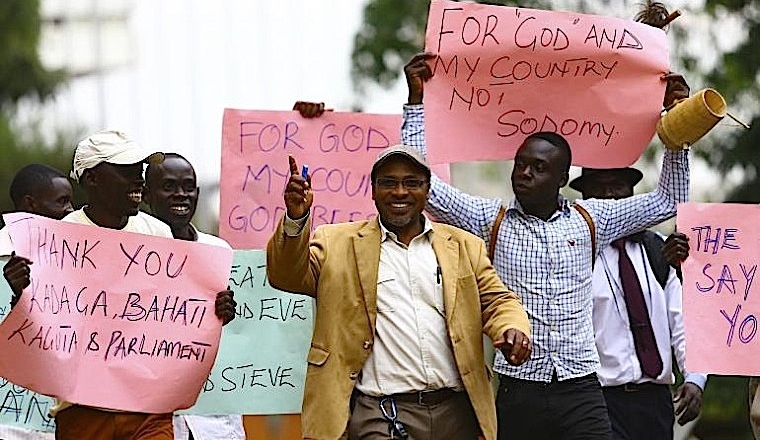
    As part of the Lunchtime Seminar Series, the African Centre for Migration & Society presents a seminar by Dr. Barbara Bompani; Associate Professor in African Development and Director of the Centre of African Studies at the School of Social and Political Science, the University of Edinburgh. The rise and political action of Pentecostal-charismatic communities have, in the past decade, impacted upon the very nature of Ugandan politics, firmly integrating morally aligned perspectives into public policy. The impact of Pentecostal discourses in the country is in particular laid bare around issues of sexuality and morality. The Anti-Pornography Act, the Marriage and Divorce Bill, and the Anti-Homosexuality Act briefly approved in December 2013 and then nullified by the The Ugandan Constitutional Court in August 2014, are intrinsic to this public moralisation and religiously driven public action. Since suffering isolation and persecution during Idi Amin’s era, Pentecostal-charismatic churches (PCCs) have grown rapidly over the past three decades. Alongside their numerical growth their political and public participation has increased and is now very visible. In particular, Pentecostal-charismatic leaders have focused their energies on articulating the immorality of homosexuality, which they often present as a Western import that clashes with African and Christian values. Lesbian, Gay, […]

  • Book launch and discussion: The mayor of Mogadishu

    Anthropology Museum, Central Block, East Campus

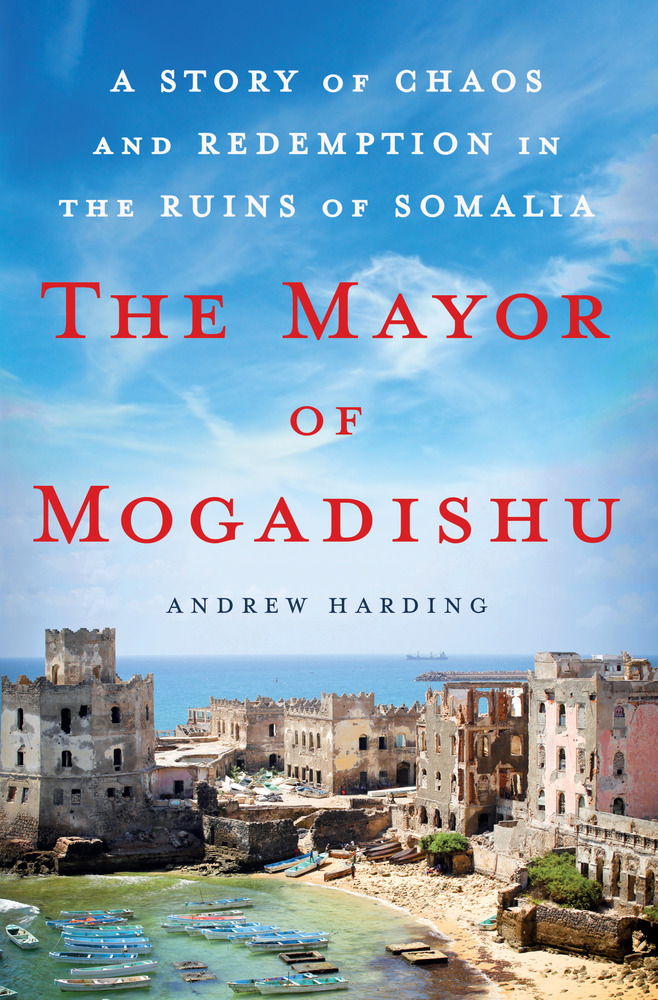
    An epic, uplifting story of one family’s journey through the violent unraveling of Somalia, and a timely exploration of what it means to lose your country and then to reclaim it.  In The Mayor of Mogadishu, one of the BBC’s most experienced foreign correspondents, Andrew Harding, reveals the tumultuous life of Mohamud ‘Tarzan’ Nur - an impoverished nomad who was abandoned in a state orphanage in newly independent Somalia, and became a street brawler and activist. When the country collapsed into civil war and anarchy, Tarzan and his young family became part of an exodus, eventually spending twenty years in Chalk Farm in north London.But in 2010 Tarzan returned, as Mayor, to the unrecognizable ruins of a city now almost entirely controlled by the Islamist militants of Al Shabab. For many in Mogadishu, and in the diaspora, Tarzan became a galvanizing symbol of courage and hope for Somalia. But for others, he was a divisive thug, who sank beneath the corruption and clan rivalries that continue, today, to threaten the country’s revival. The Mayor of Mogadishu is a rare an insider’s account of Somalia’s optimistic beginnings and subsequent unraveling, and an intimate portrayal of one family’s extraordinary journey. Biography ANDREW HARDING has […]

  • Migrants, city making and the value creation processes in a multiscalar perspective: Space and time in migration scholarship

    Humanities Graduate Centre Seminar Room, South West Engineering Building, University of the Witwatersrand East Campus

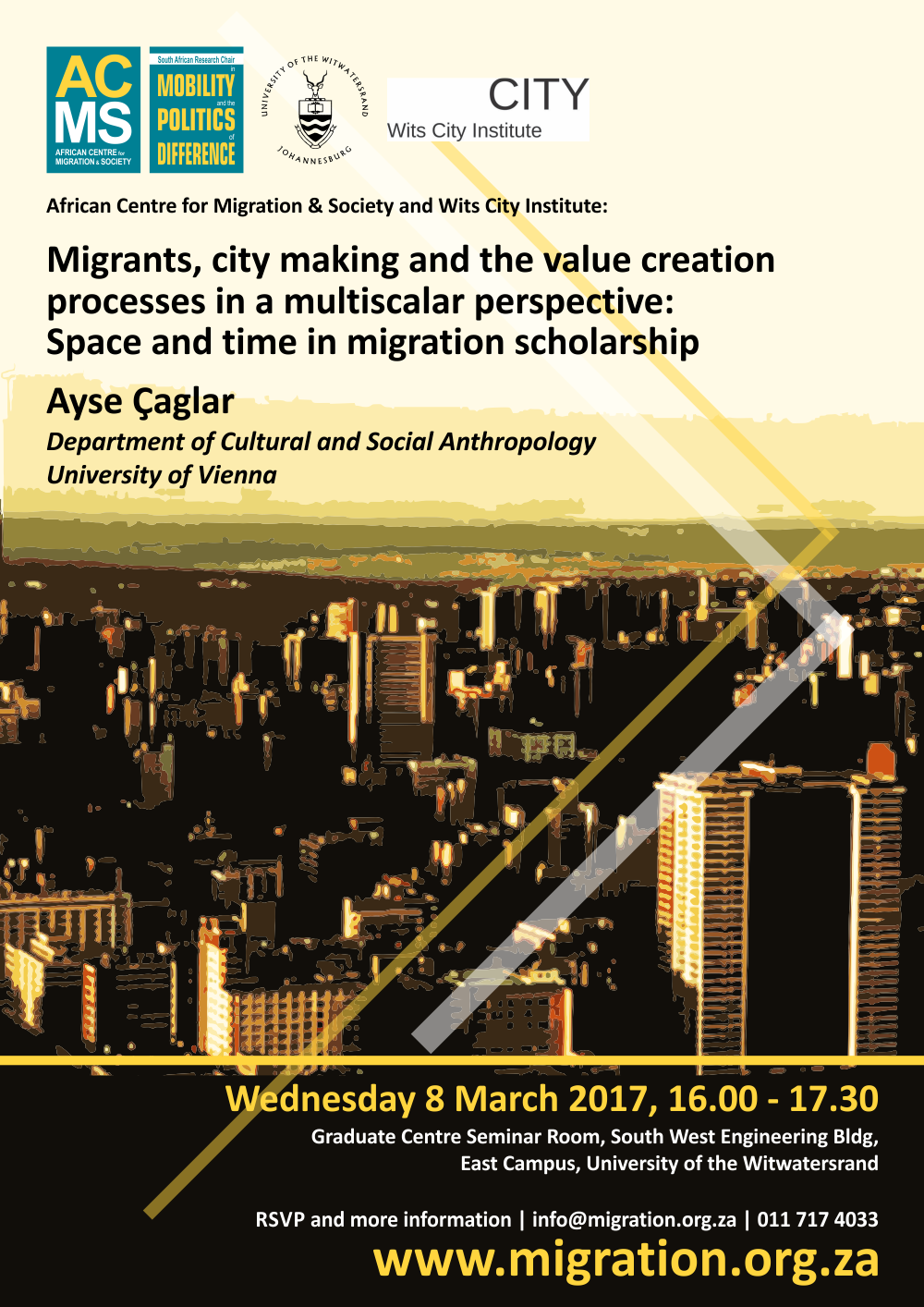
    In the context of increased visibility of migratory movements, there has been a renewed interest in migration processes, practices and the challenges migration dynamics pose to the taken for granted “groups of solidarity”, and to scholarship aiming to analyse these processes. However, many of the approaches in migration scholarship including the transnational migration, fail to capture these dynamics in light of a multiscalar perspective. Such and endeavor requires a radical rethinking of the spatial and temporal frameworks of migration scholarship, as well as the unit of analysis. Although an increasing number of migration scholars have started to address the spatial frameworks informing migration scholarship and focused on the location of migrants in space, the temporal narratives of migration scholarship have been rather neglected. The temporal frames informing different conceptualizations of migrants, their attachments and relations also situate migrants in time in distinctive ways. In this talk, Professor Ayse Caglar suggests that to unravel the spatial and temporal frameworks of migration scholarship including the cultural industries within which migrants are emplaced, we need a multiscalar perspective. In this way, we can situate the revaluing and devaluing of differences within broader dynamics of value creation processes and accumulation of wealth through displacement […]

  • An “NGOisation” of the social cohesion policies between migrants and South Africans? Initial results of an ethnographic investigation of the Cape Town migrant cause

    ACMS Seminar Room 2163, South East Wing, Second Floor, Solomon Mahlangu House, University of the Witwatersrand East Campus

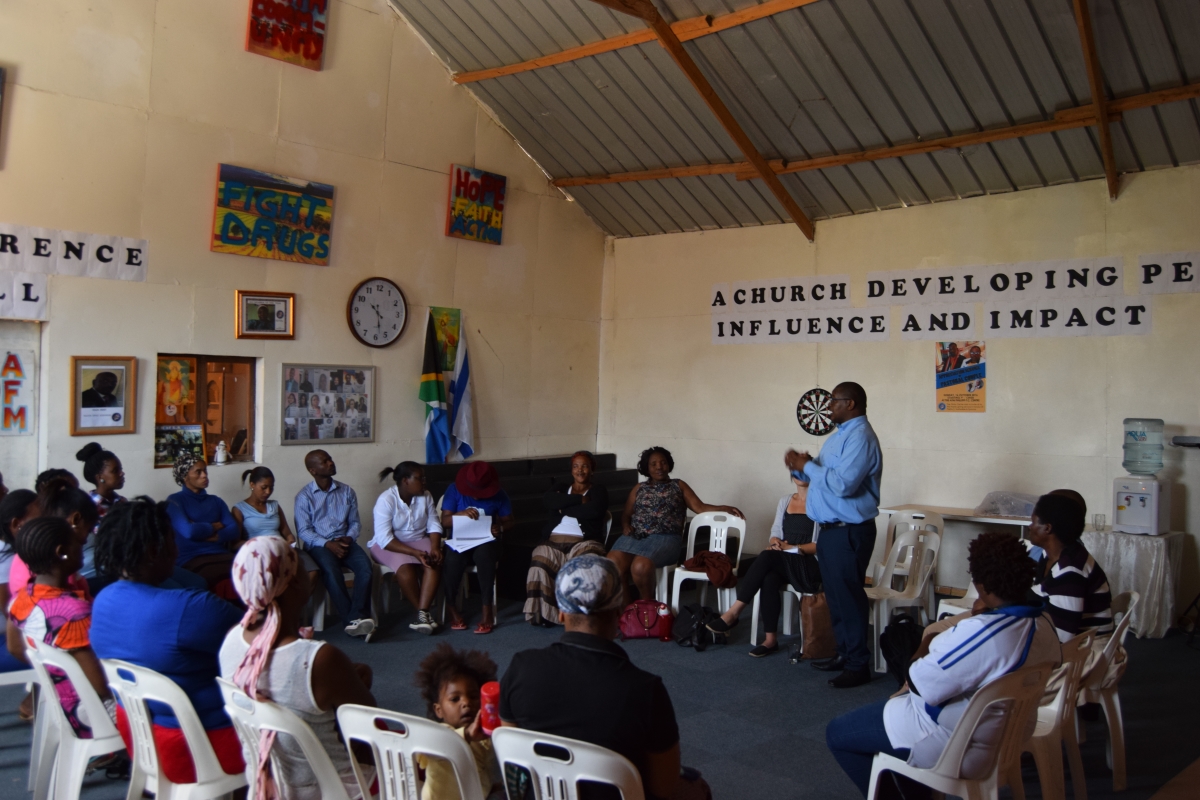
    There have been diverse answers from the “civil society” to xenophobic violence since the end of Apartheid. Over the years, more and more “specialised” Non-Governmental Organisations - involved in international “policy networks” (Le Galès, 2004) and using organisation and intervention principles imported from abroad - have emerged. The presentation will question this “NGOisation” (Falquet, 2003) of the migrant cause and its effects. From January to December 2016, the presenter conducted a participant observation in a Capetonian NGO, “implementing partner” of the UNHCR tackling social cohesion issues between South Africans and nonnationals in underprivileged communities. Building on the data collected during this fieldwork, and on the results of a second participant observation started in January 2017 within a similar structure, the presentation will analyse the impact of these NGOs’ intermediary position between different social worlds (funders, South African state, South African and non-national communities, university, social movements, other NGOs, etc.) on the activists’ work and on their individual trajectories. It will posit that social cohesion public policies are the product of the aggregated actions of the different “street level bureaucrats” (Lipsky, 1980) acting within those NGOs who reify in their daily routines broader social structures. Hence, what is at stake here is not […]